It can, but a single drip seldom explains a bill that suddenly jumps. Take the federal estimate: a faucet that drips once every second loses over three thousand gallons across a year, about eight gallons per day. That counts, yet a doubled bill points somewhere else. The usual suspects are sorted below, with a test for each. When the drip is what bothers you, the faucet, sink and disposal page describes a repair visit.
What does one drip cost you?
A slow drip is a few gallons a day. A faster one, or a thin steady stream, multiplies that several times over. On most bills the slow drip adds only a small amount, while a faucet left trickling for months adds up quickly.
Run the numbers on your own statement. Many Southern California utilities bill by a unit of 748 gallons, shown as CCF or HCF, with the price per unit printed beside it. Divide the gallons lost by 748, then multiply by that price. A drip gives a small answer; a stream does not.
A drip from the hot side also costs gas or electricity, because the water heater keeps topping off hot water that never gets used.
What else makes a bill spike?
The big movers are a toilet whose flapper is worn, a stuck irrigation valve or sprinkler line, pipework seeping within a wall or beneath concrete, a faulty softener or appliance, a new habit like filling a pool, and a billing cycle that ran a few days longer. The faucet sits lower on this list.
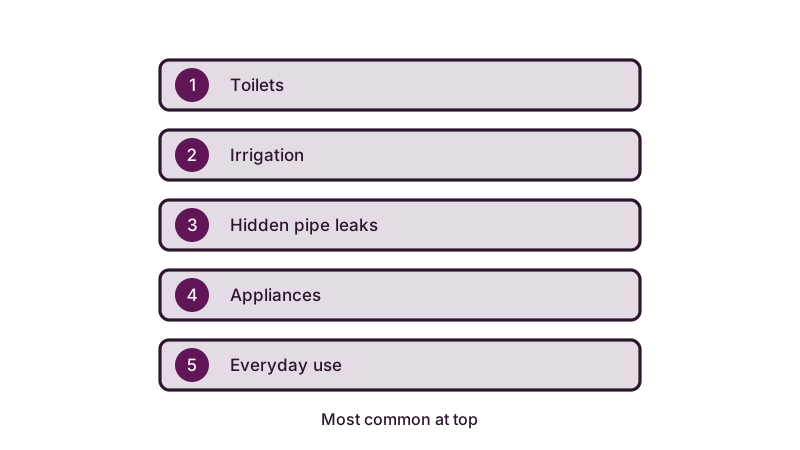
From most to least common culprit:
- Toilets. A worn flapper can lose hundreds of gallons a day in silence. Quieting a running toilet rarely costs much.
- Irrigation. A stuck valve or cracked head runs whenever the system is on, and the overspray looks like normal watering.
- Hidden pipe leaks. Slow seepage in walls or below slabs shows only on the meter. Postwar houses in Torrance and Gardena with aging copper or galvanized supply are typical places to look.
- Appliances. A failed softener valve, ice maker line or water heater relief valve can run quietly.
- Use. Visitors, a filled pool, a new garden or a longer billing period explain many spikes.
Leaks are everywhere. The EPA reports more than 9,300 gallons wasted per home each year. The article on high water bills takes each cause in turn.
How do you prove there is a leak?
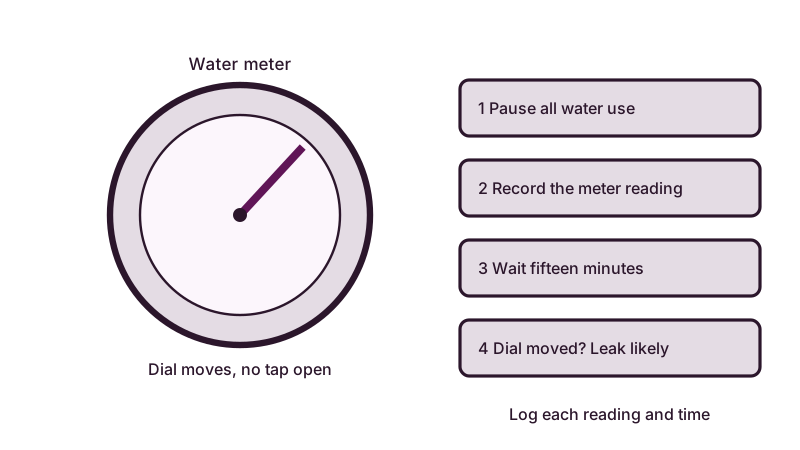
Pause every tap and appliance, record the meter, give it two hours, then read it once more. Any movement of the dial or flow indicator confirms a leak. Then close the valve where the pipe meets the house. A meter that still creeps means the leak is in the buried pipe between meter and building.
To narrow it further:
- Meter runs with the house valve open but stops once it is shut: the leak sits indoors or in the irrigation.
- Tint each toilet tank using a few drops of dye and leave it untouched ten minutes. A matching shade in the bowl exposes the flapper, as the EPA also advises.
- Shut the irrigation supply and watch the meter.
- Look at the water heater relief valve line and the softener drain.
Record each reading with the time. Reading again next morning helps, since a slow leak reveals itself over hours.
When the meter proves a leak you cannot locate, a plumber can pressurize each line and use acoustic listening gear. For a suspected slab problem, the choices are laid out in slab leaks: repair or repipe.
Can you repair the drip yourself?
Usually. Most drips trace to a worn washer, cartridge, O-ring or valve seat. Close the stops below the sink, block the drain so nothing falls in, pull the handle and cartridge or stem, and fit a matching replacement. Rebuild, restore the water, watch for beads. An old faucet crusted with corrosion may be cheaper to replace outright.
The faucet type decides the part: a rubber washer in compression styles, a replaceable cartridge in cartridge and ceramic disc models, springs and seats in ball styles. A hardware store counter can match the old part by sight. Two longer walkthroughs exist, one for a leaking sink faucet and a general guide to leaky faucet repair.
Call for help if the stops will not turn, the body is eaten away, or water appears below the sink instead of at the spout.
Will the utility credit you after a repair?
Some suppliers adjust bills for a documented leak that was repaired, but the policy varies by supplier and by case. Torrance Municipal Water, Cal Water and Golden State Water each set their own rules. Hold on to the repair receipt and meter readings, and ask customer service before counting on a credit.
We cannot say what any one utility will do, so ask yours directly.
Common questions
What is a realistic time for the fix?
With easy access, a plumber commonly wraps up a cartridge or washer swap in under an hour; a first-timer needs longer. Corroded stops, awkward fittings or a full replacement add time. Tracing a hidden leak behind a wall takes longer than any faucet job.
What should the plumber explain before starting on a leak?
Find out whether the first visit includes leak detection or just a repair, what the quote covers, and who closes up an opened wall. Ask whether any permit applies and how a second leak found later would be billed. It is fair to want the price in writing first.
Is it necessary to stay for a faucet repair?
For the opening minutes, yes. An adult shows the fixture and the stops, then agrees to the quote. If that is not you, arrange a trusted adult. Take everything out from under the basin so the plumber can get at the supply lines.
Why is my bill high when I find no leak?
Check the billing period length, seasonal watering, guests, a new appliance and any meter reading error. Compare against the same months of last year. If nothing explains it, ask the utility to re-read the meter or check it for accuracy.
Is a slow drip worth fixing?
Yes. It wastes water steadily, the cost of a washer or cartridge is small, and a drip that has started often gets worse. Dripping also stains sinks and can signal a worn valve seat that will need more than a washer.
The rest of our guides start from plumber in Torrance.
Sources used
Last updated