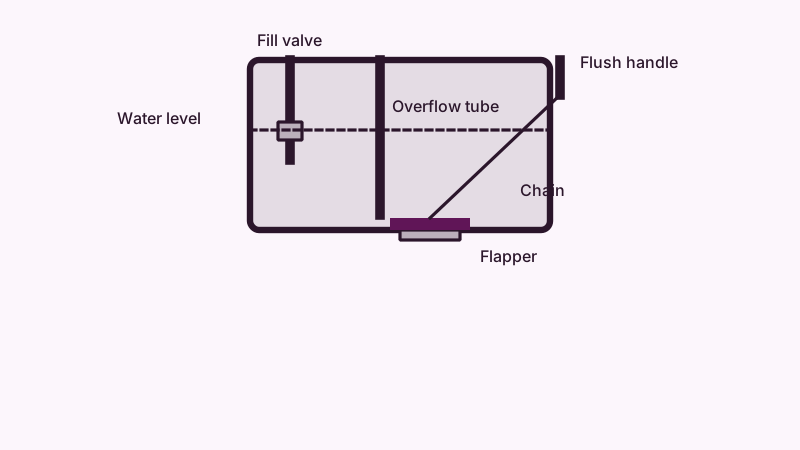
Take the lid off the cistern and watch it for a minute. A thread of water sliding down the central standpipe, or a tank refilling by itself in an empty room, tells you the fault is inside, and a screwdriver plus an inexpensive part usually ends it. A puddle at the base of the bowl is a separate problem, handled in its own section. Torrance households with other toilet trouble can browse toilet repair help.
Why is my toilet running, and where do I look first?
Two parts share the blame: the rubber flapper and the fill valve. Water spilling down the standpipe says the float is set high. Water slipping beneath the rubber flapper and into the bowl says the seal has failed. Both leave the tank forever topping up, which is the sound you hear.
Confirm with dye. Put several drops of food dye in the tank and wait ten minutes without touching the handle. A tinted bowl means the flapper is leaking. The EPA calls toilets a common source of household leaks, and says an old or worn flapper is a frequent cause. Its Fix a Leak Week page advises checking the flapper periodically and replacing it at least every five years.
Flush once afterward, so the porcelain does not stain.
How do I stop a toilet that runs without pause?
Begin at the flapper, the rubber disc sealing the tank's drain hole. Turn the wall valve off, flush the tank dry, and wipe the ring the flapper lands on; slime or crust there defeats a good seal. A flapper that is soft, warped or split should come off and travel with you to the hardware store as a pattern.
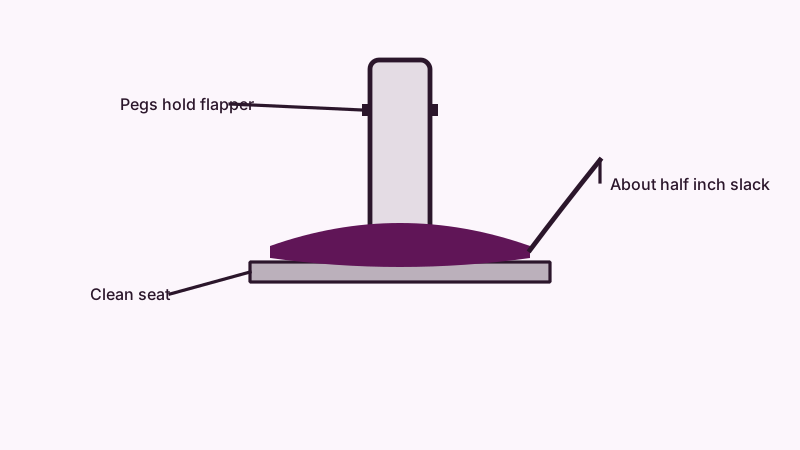
The new one hooks onto two small pegs on the standpipe. Allow roughly a half inch of looseness in the chain between the handle arm and the flapper, so it neither holds the flapper ajar nor tangles beneath it. Open the valve again, let the tank refill, then flush it several times.
A clear dye test afterward means you are finished. Flapper shapes are compared in toilet flapper types, and the full job is in replacing a toilet flapper.
Why does it start up on its own now and then?
Some call it a ghost flush. Water leaks past the flapper so slowly that the tank level creeps down until the fill valve wakes, tops it up, and falls silent. The pause between bursts can last minutes or hours, which is why it feels random.
Treat it like a constant run: clean the seat, change the flapper, adjust the chain. If dye shows the flapper holding, suspect the fill valve instead. One that fails to close firmly may hiss or dribble into the standpipe, and the swap appears in a fill valve replacement.
How do I set the float or the fill valve properly?
On a modern fill valve the float is a cup riding the shaft, and a clip or screw sets its height. Water should stop roughly an inch below the rim of the standpipe. If it climbs higher, lower the cup until the valve closes sooner.
An old ballcock hangs a ball on a metal rod: bend the rod down a touch, or turn its screw, for the same result. A valve that still will not close may have grit on its seal. Shut the supply, lift the cap as the maker describes, and flush the seal with water from the tap.
Cracked or hissing valves are worth replacing instead of nursing. They cost little, and most people finish in half an hour. Labor numbers for the job are in fill valve replacement costs.
What explains a puddle beside the toilet?
That leak is outside the tank, so look elsewhere. Dry everything and find the source. Wet at the wall connection means a loose or old supply line. Wet around the base itself points to the wax ring, and a drip at the tank-to-bowl seam suggests the gasket between them.
Snug the supply nut a quarter turn and replace the line if it is aged. The wax ring is bigger work: the bowl is lifted off, the old wax is cleaned away, and a new ring seats the bowl again. Leaks like this can rot a subfloor, so a spongy floor is a signal to phone a plumber. The visit itself is described in toilet leak plumber help.
Where does the DIY approach end?
Phone one if fresh parts did not end the running, if the shutoff valve is frozen open, or if moisture appears at the bowl's base. A wall valve that spins without closing is one more reason; forcing it risks a flooded bathroom.
Water adds up: the EPA reports that the average household's leaks waste more than 9,300 gallons a year, with toilets frequent offenders. If your bill looks high, why a water bill climbs helps you sort out causes, and replacing a whole toilet shows costs when a new bowl makes more sense. The quote form takes a description of what is happening, and a local plumber is arranged from there. The Del Amo Plumbing home page holds the rest of our service list.
Common questions
How long do these repairs take?
Expect 15 minutes or so for a flapper with the water off. A fill valve is nearer thirty minutes for a beginner, more if a nut has seized. Lifting the toilet for a wax ring takes longer. A plumber on site generally wraps up any of these within the hour.
What if the new flapper did not stop the run?
Often the style is wrong, the chain is tight, or the seat is pitted so no seal forms. Loosen the chain, scrub the seat with a scouring pad, and repeat the dye test. A bowl that stays clear while the tank keeps refilling implicates the fill valve.
Does a toilet that runs push up my water bill?
Yes. A slow leak can lose many gallons daily in silence, and the EPA lists toilets among common household leak sources. Test with the meter while everything is off, or use dye. Replacing a flapper is among the least expensive ways to bring a bill down.
Is the tank repair a safe DIY job?
For the parts inside the tank, yes: the water is clean, and no gas or electricity is involved. Close the supply first, and never crank plastic nuts; fingers plus a small extra turn is enough. A rotten floor or a stuck shutoff valve is the cue to bring in a plumber.
Sources used
Last updated