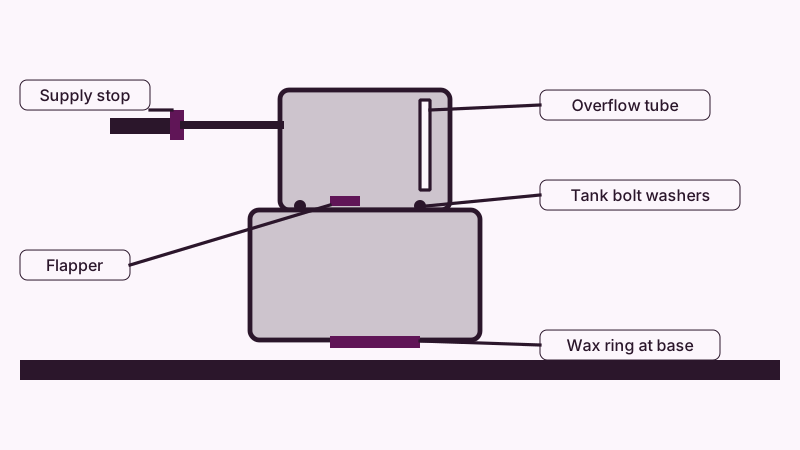
Standing in a wet bathroom, the first question is whose water this is. Tank water is clean and merely annoying. Bowl or drain water is a hygiene hazard, so glove up and turn the stop behind the toilet first. After that, the spot where the puddle forms points to a short list of failed parts, and the repair routes appear on our toilet repair page.
Which part is leaking, based on where the water appears?
The location is the clue. A wet base points at the wax seal, loose floor bolts or cracked porcelain. Drips under the tank implicate the bolt washers or the rubber gasket joining tank to bowl. Water by the wall implicates the supply hose or stop valve. A tank that sweats on a muggy day is just condensation.
To catch the source, dry everything with a towel, then press strips of toilet tissue against the base, the bolt heads and the supply fittings. Flush once and check which strip darkens first. It beats guessing, and the whole test takes a few minutes.
| Where the water shows | Most likely culprit |
|---|---|
| Wet ring at the base once flushed | Wax seal failed, bolts loose, or bowl cracked |
| Drip falling from the tank's bottom edge | Rubber washers on the tank bolts, or the large gasket |
| Wet at the supply connection | Loose nut, worn washer, corroded valve |
| Tank wet all over, humid day | Condensation |
| No puddle, but the tank keeps refilling | Silent leak past the flapper |
What if the floor is dry but the bill is high?
Think flapper, not seal. A flapper that fails to close sends a thin stream down into the bowl day and night. Squeeze dye into the tank, replace the lid, and look again after a coffee break. Tinted water in the bowl proves it, and it is the check the EPA recommends.
Silent leaks cost the most because nobody notices them. EPA's average for homes is upward of 9,300 gallons lost a year, and toilets are a regular offender. Inside parts get their own guides: a toilet that never stops cycling and flapper repair.
Why does the base of a toilet leak?
Most often the wax ring has lost its seal. That ring sits between the bowl and the drain flange in the floor, and anything that lets the toilet move, such as loose closet bolts, a flange that sits too low, or a rotting subfloor, will break it. Water appears after flushing, and a spongy floor means the damage is spreading.
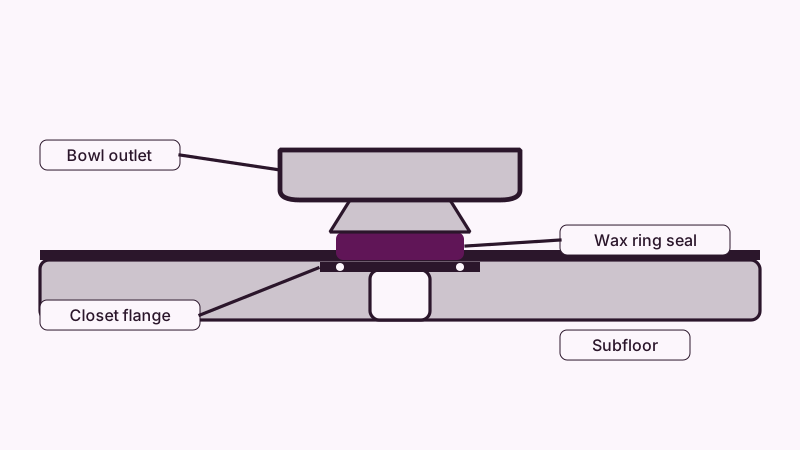
Do not live with a wobbly toilet. Every wobble squeezes the seal, and the seepage rots the subfloor and can stain the ceiling of a room below. In older South Bay houses, the cast flange can be rusted or cracked, in which case a fresh ring on its own will not last, and the plumber has to repair or replace the flange too.
The job itself: close the supply, empty the tank and bowl, unbolt and lift the toilet, scrape away the old wax, fit a new ring or rubber seal, then lower the toilet straight down and snug the bolts evenly. Porcelain breaks when one side is over-tightened. A toilet weighs a lot and is awkward to lift, so plenty of households pay for this one.
How is a wet hose connection or stop valve handled?
Close the valve, give the compression nut a quarter turn, and wipe the joint. A braided supply line that keeps weeping should be replaced, which is cheap and needs no soldering. A stop valve weeping around its spindle, or one that will not seal, needs its own repair, and the whole house supply may need closing first.
Old multi-turn valves like to seize, and a forced stem can snap. Where gentle tightening should stop is explained in toilet shutoff valve repair. If the stop is frozen open, the main has to go off before you phone anyone.
Is a leaking tank something you can fix?
Often, yes. Worn bolt washers and a hard, flattened gasket cause most tank drips, and a rebuild kit plus basic hand tools handles them in under an hour. Hand-tight plus a small extra turn is enough. Over-tightening cracks the tank, and a hairline crack means replacement, not a patch.
Drain the tank, unhook the supply, remove the bolts, fit the new gasket and washers, and put it back together. Porcelain that has cracked is a replacement question, and toilet replacement pricing shows what that involves. If the fill valve is the leaky part, see the walkthrough on toilet fill valve repair.
Which signs mean the job is beyond DIY?
Hand it over when the toilet wobbles and leaks at the foot, the floor feels soft, a stain appears on the ceiling beneath, the stop will not close, the porcelain is cracked, or a repair fails to hold. Damage spreads out of view, and early action keeps the bill smaller.
Already seeing a stain downstairs? Read ceiling water leak too. Tell us where the water shows up through the quote form and a local plumber comes to the house.
How do you limit the damage until the plumber arrives?
Shut the stop valve, mop the floor, get air moving with a fan or open window, and tell the household not to flush. A stuck valve means the main goes off instead. Pack towels around the base, snap dated pictures for a possible claim, and treat the toilet as closed until the source is sealed.
Common questions
What is the likely visit length?
A supply hose or gasket is a quick job, often finished within the hour. Setting the toilet back on fresh wax usually fills a morning hour or two. A damaged flange or soft subfloor stretches it, since the floor must be sound before the toilet goes back.
What should the written price cover?
Check for the seal or wax ring, a fresh supply hose, a look at the flange and floor, and whether the old toilet is reused or replaced. Ask how rot would change the figure, and get every item written down ahead of the first tool coming out.
Do I need to stay in the house?
At least briefly. An adult leads the plumber to the bathroom, points out the stop valve and approves any extras. Lift rugs and storage off the floor, and mention earlier leaks or recent repairs, because history helps the diagnosis and keeps the plumber from repeating a repair that already failed.
Why does water only show up after a flush?
Each flush pushes a rush of water down the bowl and drain, and a tired seal or crack lets some escape at the foot. A tank gasket may also drip as the tank refills. Note where the first drop forms and take a picture to show the plumber.
Is a slow seep worth worrying about?
Yes, but it is not an emergency. The slow ones damage the floor quietly, so schedule a repair soon. Sewage at the base, a cracked bowl, or water that keeps coming is urgent. Shut the valve and phone at once; sewage on the floor is no job for ordinary towels.
The rest of our guides start from plumber across Torrance.
Sources used
- EPA WaterSense, Fix a Leak Week (toilet dye test)
- Plumbing trade guidance on toilet seals, wax rings and supply lines, checked November 2026
Last updated