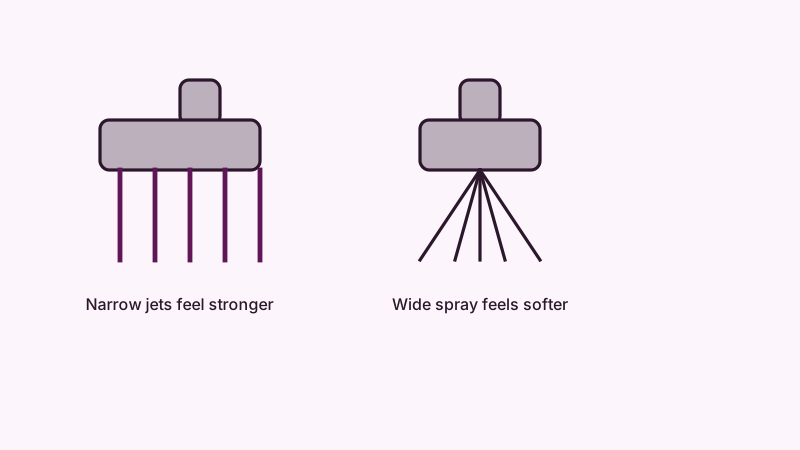
Start with a reality check. A showerhead does not create pressure; it shapes the water that arrives. California adds a cap: showerheads made since mid-2018 may pass no more than 1.8 gallons per minute when tested at 80 psi, tighter than the federal 2.5. So the practical goal is to choose a head that spreads 1.8 gpm into a forceful spray, and to check that your pipes are delivering what they should. Our low water pressure hub covers the plumbing side.
Which type of showerhead feels strongest at low pressure?
Heads that gather the flow into fewer, narrower jets feel strongest: high-velocity or turbo designs, and air-induction heads that blend air into the stream. Pressure-compensating models keep delivery steady as supply pressure sags. A wide rain head spreads the same water thin, so it feels weaker. Handheld units with a focused setting give you a choice.
How the main designs compare, in feel rather than in extra water:
- Narrow-jet or turbo spray. Fewer, smaller nozzles raise the water's speed, so it hits harder.
- Air-induction. Air bubbles fill the stream, which makes it feel fuller.
- Pressure-compensating. Designed to hold delivery level across a span of supply pressures. EPA's WaterSense specification includes pressure compensation among its performance tests, with spray force and coverage.
- Wide rain head. Pleasant, but at low pressure it can feel like a drizzle.
- Handheld with multiple settings. Lets you pick a concentrated pattern and rinse hard-to-reach spots.
I am not recommending a brand, because pressure performance depends on your house, and I have not tested units here. Read the box for the flow rating and look for the WaterSense label, which means independent testing showed the head uses no more than 2.0 gpm and meets spray force, coverage and pressure-compensation criteria.
Can I buy a showerhead that beats California's limit?
No legal one. California's Title 20 caps showerhead flow at 1.8 gpm at 80 psi, and heads sold in the state are meant to comply. The rule also sets a floor: flow at 20 psi must be at least 60 percent of the rated figure. I would not suggest removing the restrictor.
Because the rating is taken at 80 psi, a head in a home with lower pressure will pass less than 1.8 gpm. That is why pressure compensation matters in practice. The federal limit is 2.5 gpm, so a head bought elsewhere may not meet the California figure; check the flow marking before you buy.
Is the problem the showerhead, or my plumbing?
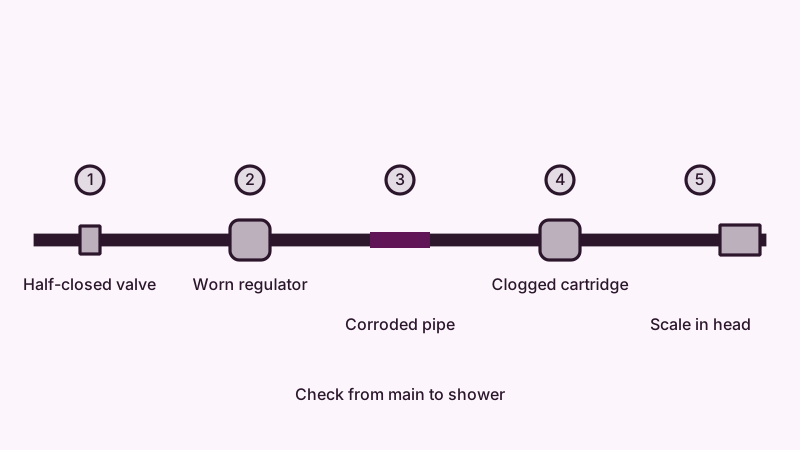
Test before you shop. Unscrew the head and let the bare shower arm run; if flow is strong, the head itself is clogged or restrictive. If it is weak, check other fixtures. Low pressure everywhere points to the supply: the regulator, a partly closed valve, corroded pipe or a street problem. Low on the hot side only points to the water heater.
A flow check needs only a bucket and a watch. Hold a one-gallon jug under the head and time the fill. A 1.8 gpm head fills it in about 33 seconds; a far slower fill hints at a restriction in the head or the pipes.
Likely causes, starting with the cheapest to fix:
- Mineral scale in the head. Soaking the head in white vinegar, which many makers suggest, then brushing the nozzles often frees it. Torrance's 2025 water quality report gives no hardness figure and outside sources vary, but scale is common in Southern California, so check this first.
- A half-closed valve. Some shutoff, or the main itself, may not be fully open.
- Failing cartridge or diverter. A shower valve cartridge can clog or wear.
- Pressure regulator. A worn regulator can drop pressure to the whole house.
- Corroded supply pipe. Old galvanized pipe narrows inside. See galvanized pipe replacement for why.
- Leaks. A hidden leak can reduce pressure; see why a water bill climbs.
What do I check on the house side?
A plumber can read static pressure from a hose-bib gauge in minutes. The pressure regulator is the brass, bell-like fitting you will often see close to the main shutoff. Torrance publishes a water pressure map on its customer information page, and pressure differs by zone, so ask the city's water division what to expect at your address.
If pressure is below what your fixtures need, or if it changed suddenly, read about adjusting a water pressure regulator and sudden low water pressure. For a shower-specific diagnosis there is low shower pressure. Adjusting a regulator is a small job; replacing a failed one belongs to a plumber, and so does any change to the main line.
Does a low-flow head save anything?
Yes. EPA says WaterSense showerheads must use no more than 2.0 gpm, and that an average family could save about 2,700 gallons and more than 330 kilowatt-hours of electricity per year by switching from a standard head. In California, the standard is already stricter, so savings from moving to a compliant head are smaller if you already have one.
Most of the saving comes from heating less water. Even so, if you shorten your shower because the spray feels weak, the saving is offset by frustration. A head that feels good at 1.8 gpm is the best of both.
The water you use also matters for your bill; Torrance bills in tiers, covered in the page linked above.
Common questions
Will a more expensive showerhead give better pressure?
Not necessarily. Price buys finish, adjustable settings and sometimes better engineering, but flow is capped by law and by your pipes. Judge a head by its spray pattern, pressure compensation and the way it feels at your pressure, and check that it has a clear return policy so you can swap it.
Can I add a shower pump or booster?
Boosters exist, but they are rarely the right first step, since they cost money, need power and plumbing work, and do not fix a clogged valve or a failing regulator. Diagnose the cause first. If a booster is still considered, ask a plumber about permits and compatibility with your system.
Why is my shower weaker when someone runs another tap?
Because fixtures share the supply, and when two draw at once the available pressure splits. Pressure-balancing and thermostatic valves also react to draws elsewhere. If the drop is dramatic, the supply pipe may be undersized or corroded, which a plumber can check.
When does a showerhead need cleaning?
Perhaps every few months where mineral scale builds, or whenever the spray starts spitting sideways or thinning out. A vinegar soak and a soft brush are typically enough. If the head is plated or has special finishes, check the maker's instructions first.
Who should I call if pressure is low in the whole house?
A plumber, who can measure pressure with and without water running and inspect the regulator and supply lines. Our quote page takes the description, and we line up someone local. Look up any contractor on the CSLB website, particularly when the job nears $1,000.
For the wider picture, start with Torrance plumber.
Sources used
Last updated