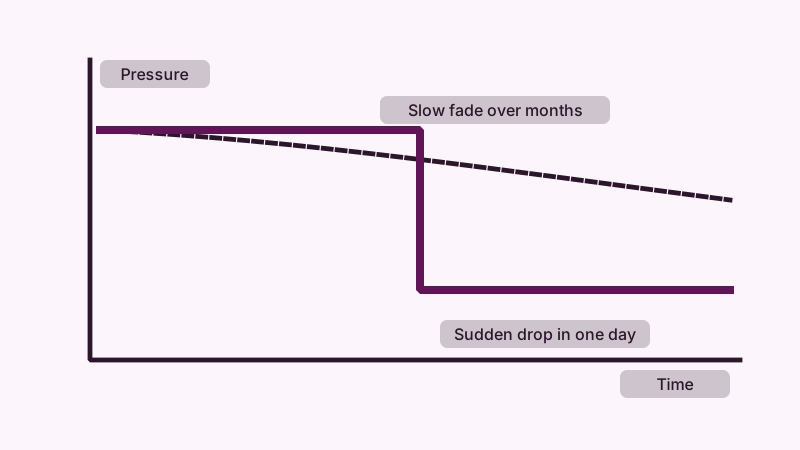
When pressure drops overnight, something changed. Slow decline over months points to scale or an aging regulator. A cliff points to an event: street work, a valve, a failed part, or a leak. The trick is to ask what happened in the last two days, then check from the street inward. Slower declines are handled in the main low water pressure guide. Here we stay with the overnight drop.
Did something change outside your house?
Start at the street. Utility repairs, main breaks, hydrant flushing or a valve exercised nearby can drop pressure for a whole block for hours. Ask a neighbor, look for work crews, and check your water utility's outage notices. If others are affected, the fix is on the utility's side, and waiting may be all that is needed.
Torrance Municipal Water serves much of Torrance, and parts of the South Bay are served by other utilities, so the right number to call depends on your bill. A utility can tell you whether there is a known issue near your address. If supply is normal on their end, the cause is inside your property line, and the rest of this page applies.
Is a valve half closed?
Walk to the house-side shutoff first, then to the valve beside the meter. Plumbing, irrigation or appliance work can leave a valve partly closed, and gate valves are easy to leave a few turns short. Open each fully. If pressure jumps back, you found it. Valves that will not move or feel gritty are worth replacing.
Other valves worth testing: the shutoff before the water heater, the valve before a softener or filter, and the angle stops under the fixtures. If only one fixture is weak, the stop under it is the first suspect. A sudden drop right after any plumbing visit is nearly always a valve left partly closed.
Could the pressure regulator have failed?
Yes. A regulator that fails closed or clogs with debris can cut pressure hard in a day. Many South Bay houses carry one just past the point of entry. Screw a pressure gauge onto a spigot outdoors; a number below roughly 40 psi while the street is normal implicates the regulator.
Regulators wear, and published guidance ranges widely on how long they last. Water carries grit, and a bit of debris after street work can jam the seat. A plumber can test, clean or replace one. To find yours, see where the regulator is usually found, and adjusting the regulator shows what a screw turn can and cannot fix. For a swap, see water pressure regulator replacement.
Is a leak stealing the water?
Water escaping from a big leak along the pipe after the meter never reaches the taps, so pressure sags quickly. Shut off every use and read the meter. A creeping dial means a leak. Check for wet spots in yards, hissing sounds, warm floors and damp walls. A burst needs the main closed right away.
For the meter routine and the telltale signs of a split line, read spotting a burst pipe. A pressure drop paired with a rising bill is a strong hint, and the EPA's household leak average is above nine thousand gallons yearly.
Is it just hot water, or just one tap?
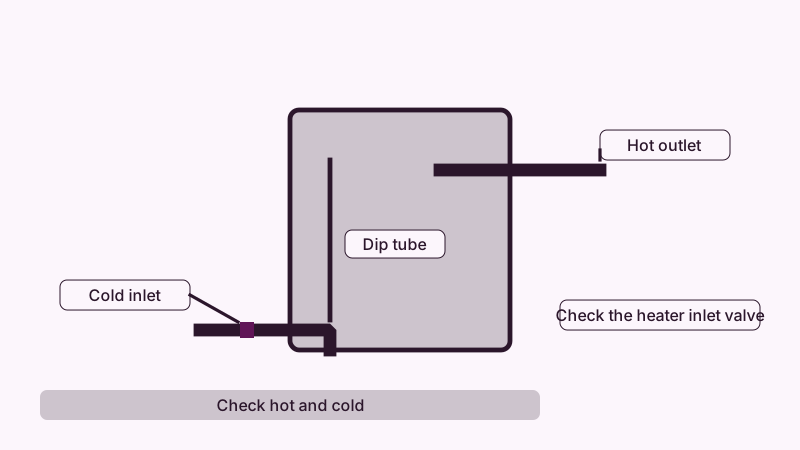
Compare the two temperatures. Weak hot alone sends you to the heater: its inlet valve, a clogged dip tube, sediment or a half-closed shutoff. One weak fixture implicates its own aerator, cartridge or stop rather than the house supply. Hot water pressure low has the heater-side detail.
Debris often shows up at the aerator after street work or a pipe repair. Unscrew the aerator or showerhead, rinse it, and look for grit or flakes. If flakes of rust come out, the older supply pipe may be shedding scale.
Is a filter or softener restricting the flow?
A clogged whole-house filter cartridge, a stuck softener valve, or a sediment screen choking on debris can cut flow sharply after a change in water quality. Put the unit in bypass. If pressure returns at once, the filter or softener needs service. Many units have a bypass lever or valve for this reason.
Filters can clog quickly after street work stirs up sediment, so a change in pressure the day after the neighborhood had construction is a classic story.
How do you decide whether to call a plumber?
Book a plumber if the meter reveals a leak, the regulator or main valve looks guilty, only part of the house is weak after a cleaned fixture, or the street, valve and filter checks turn up nothing. Spraying or pooling water means closing the main first.
The checks above produce facts for the plumber: the gauge number, whether the meter creeps, which fixtures suffer, and what changed. Put them in the quote form. Gradual causes are laid out in curing low pressure in a home and the usual reasons pressure falls.
Common questions
How soon can pressure recover?
A valve or aerator fix takes minutes, and a filter or softener bypass a few more. Expect a regulator swap to occupy the plumber for around two hours, whereas tracking down a hidden leak runs longer. Utility work follows the crew's own timetable.
What facts help the plumber most?
The start time, any recent change, the list of weak fixtures, whether hot and cold are both affected, and whether the meter crawls when nothing runs. Add a gauge reading if you took one. Those details shorten the visit and sharpen the quote.
Does an adult have to stay while the work goes on?
Yes. An adult admits the plumber, shows the main valve and meter, and agrees the quote. A regulator tucked in the garage or crawlspace needs a clear path. Mention any plumbing work done lately, since it often explains a sudden change.
Can low pressure damage anything?
Weak flow alone does little harm, but the cause can. A leak can damage floors and walls, and a failing regulator that later fails open can send pressure above safe limits. Dishwashers and washers may fill slowly or run poorly. A drop followed by a spike is a reason to have the regulator checked.
Are pressure and flow the same thing?
They differ. Pressure is the push inside the pipe, while flow describes how much water actually arrives. A clogged aerator can reduce flow while pressure at the hose bib is normal. That is why a gauge reading matters: it separates a supply problem from a fixture restriction.
The rest of our guides start from the plumber guide for Torrance.
Sources used
- EPA WaterSense, Fix a Leak Week
- Plumbing trade guidance on pressure regulators and household pressure ranges, checked November 2026
Last updated