Budget somewhere between $200 and $700 for a plumber to fit or exchange a pressure regulator, and many guides settle near $400. The valve itself is the small part; labor and access make the rest. This page sits under our low water pressure plumber guide and focuses on the money.
What does fitting a regulator usually cost?
Cost guides published for 2026 mostly land between $200 and $700 installed, with averages from about $350 to $475. One splits it as $50 to $150 for the valve and $225 to $450 for labor. Those are national averages, so a Torrance quote can differ, and the quote you hold in writing is what you pay.
The bill breaks into pieces.
| Piece of the bill | Guide range | Notes |
|---|---|---|
| The regulator valve | $50 to $150 | Brass body, adjustable on site |
| Labor | $225 to $450 | Hourly rates vary by plumber |
| Repair of a failing unit | $75 to $200 | Only if the body is sound |
| Add-ons | $100 to $400 | Larger valve, gauge, smart or high-capacity unit |
| Expansion tank | Extra | Often needed downstream, ask the plumber |
A new regulator, where none existed, costs more than a swap because the line must be opened and fittings added. A straight exchange in the garage, beside the water heater, lands at the low end.
Why do two quotes for the same valve differ?
Access, pipe size, extra parts and demolition explain most of the gap between quotes. A valve on bare copper in a garage is quick work, and the plumber can have it out in minutes. One sunk in a landscaped box, or behind drywall, is slow and costs accordingly.
Postwar Torrance tract houses often have the regulator at the front hose bib line or in the garage, which keeps access straightforward. Beach-city cottages and hillside Palos Verdes lots can be tighter, and long runs between meter and house raise the labor. A galvanized main that refuses to let go of its fittings is a trap too, since a stuck fitting that gives way can crack the pipe and grow a small job into a repipe.
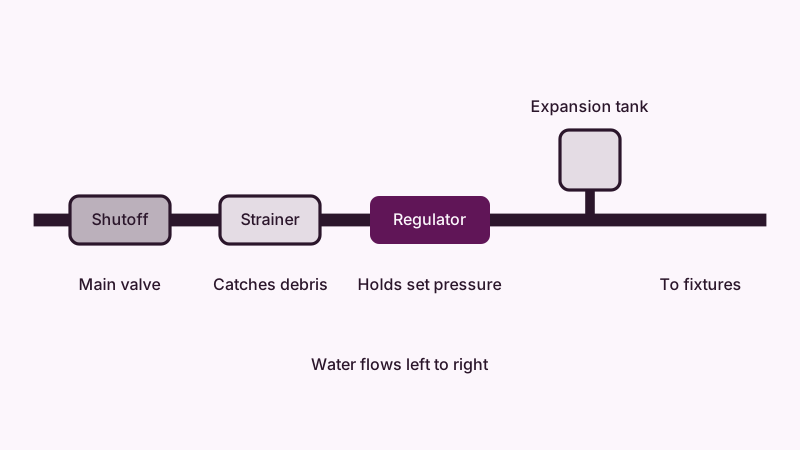
The code has a say. Section 608.2 of the California code requires a strainer and regulator when static pressure goes beyond 80 psi, and a thermal expansion tank is often added after the regulator to absorb heat-driven swelling. That tank means more parts and labor, so check that your quote lists it.
Is a regulator really what my house needs?
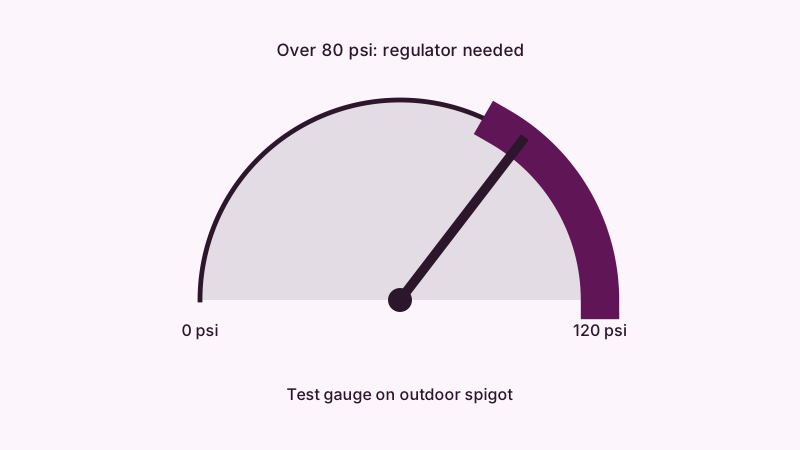
Probably, if a cheap test gauge fixed to an outdoor spigot shows more than 80 psi. The gauge is cheap and attaches in a minute. High pressure shows up as hammering pipes, a heater relief valve that drips, and faucets or fill valves that die young. Weak flow is a separate complaint.
Low pressure can still be the regulator, if it has failed closed or drifted down. But debris, a half-closed main valve and corroded galvanized pipe produce the same weak flow, so get a reading before buying anything.
Age feeds the budget. Some guides give a regulator about 7 to 12 years, so a house still running its original 1960s valve is overdue. A repair kit, listed at $75 to $200, only pays off if a replacement would cost far more.
Is it better to rebuild an old regulator or replace it?
Replace a valve past ten years of age, one that weeps at the body, or one that lets pressure creep over 80 psi. Rebuilding suits a newer valve with a clogged strainer or a tired diaphragm. If the rebuild quote is near half the price of a fresh valve, replacement is the usual call, since labor is the same.
The rebuild kit saves money, but you keep old brass around a fresh diaphragm, and the next failure is probably close. In a 1950s or 1960s house where nobody has touched the valve, a new unit is the cleaner choice.
What should a good quote spell out?
The valve model belongs on it, the target pressure, labor, an expansion tank if needed, the permit, and gauge readings from before and after. A plumber who records static pressure at an outdoor tap has proof the job worked. A spoken price for a problem nobody measured is not worth much.
California wants a contractor license for plumbing above a small job size, and the state licensing board lets anyone look one up. To compare prices, request a quote and mention your neighborhood, the symptom and any gauge reading. Weekdays, nine to five, is when requests get handled. For other jobs, the plumber cost guide and the service call breakdown show typical pricing, and our home page links each service we arrange.
Common questions
What would a pressure fix cost me?
That hinges on the cause. A regulator swap runs about $200 to $700 in published guides, a cleaned strainer or reopened valve costs less, and replacing corroded galvanized pipe costs far more. A pressure reading comes first, and the quote follows what the plumber finds.
What does replacing a regulator run in dollars?
Most guides cluster between $300 and $650, with national averages near $400 to $475. The valve itself is a modest share, and the remainder is labor. A cramped location, or an added expansion tank, pushes the figure up, so confirm what the quote includes.
What psi should a regulator be set to?
Eighty psi is where the plumbing code says a regulator becomes mandatory. Plumbers often set a home lower than that, but the exact setting is a judgment call, not a rule, and it can differ from house to house. Ask the plumber what setting they plan and why.
Can I install a regulator myself?
Opening the main supply can flood a house and may need a permit, so most owners hire it out. If you are handy, ask the City of Torrance Building and Safety Division about permit rules first. A wrong setting, or a missing expansion tank, can harm appliances.
Sources used
Last updated