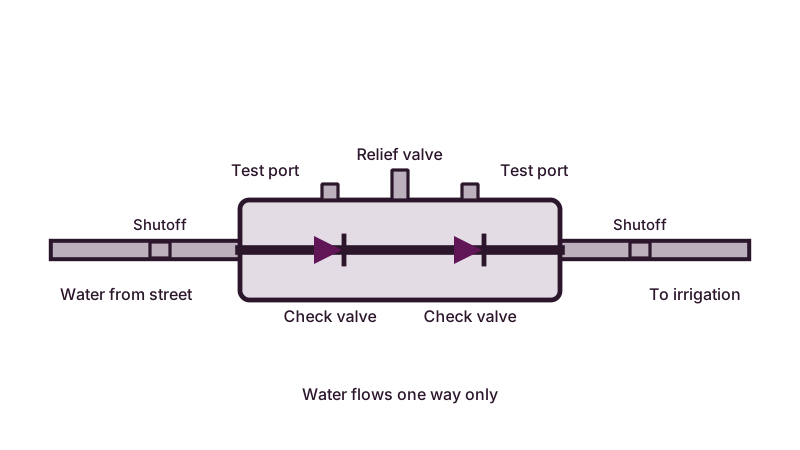
Picture a one-way gate set into the pipe. That is a backflow preventer: it exists so that used or tainted water cannot creep back toward the public drinking supply. Your water supplier usually wants it tested on a schedule, and the result goes on file. Through us, a local plumber can test the device, mend or replace it, and complete the report. It sits alongside the permit and gas work covered on our gas plumber page.
Why does my property need backflow testing?
Backflow testing proves that the device protecting the public water system still closes when it should. Water normally flows one way, from the main to your pipes. If pressure drops in the main, or rises on your side, water can reverse and carry irrigation chemicals, pool water or boiler water into the supply. The test shows the device would block that.
Any connection that could feed non-drinking water back toward the main is a candidate: a lawn sprinkler system, a fire sprinkler line, a commercial boiler, a pool fill, a carwash or a property with a second water source. The water agency decides which sites need an assembly and how often it is tested. A house with only indoor plumbing may need nothing. A property with buried sprinklers frequently has a compact device above grade, close to the meter or the front hose bib.
Statewide cross-connection rules sit in a State Water Resources Control Board policy handbook that took effect on July 1, 2024. We point to it so you know the rule is statewide, but your supplier's own program (Torrance Municipal Water in much of Torrance, Cal Water in parts of the beach cities) sets the schedule you will get a notice about.
Who has to do the test, and how often?
Test frequency is set by your water supplier, and a yearly test is the usual pattern, along with a test after a device is installed, moved or repaired. The person doing it must meet the supplier's qualification rule, which normally means a tester on the supplier's approved list. Ask the notice you received, or the supplier's cross-connection office, who is accepted.
Do not assume that any plumber or handyman can sign the report. Water agencies in California typically accept results only from testers they recognize, and the form has to match their format. When we arrange a test, we ask the plumber to confirm they are accepted by your supplier before the visit, and to return the signed report in time for the deadline on your notice.
If your notice says a device failed or went unreported, act on it: suppliers can ask for repair or replacement by a due date, and in serious cases they can restrict service until it is resolved.
What happens at the device during the test?
The tester shuts the valves on both sides, attaches a gauge set to the little test ports, and reads off two things: whether every check valve seals, and whether the relief valve opens when it should. Expect under an hour for a single home device. Water goes off for a short period, and the written result goes to your supplier afterward.
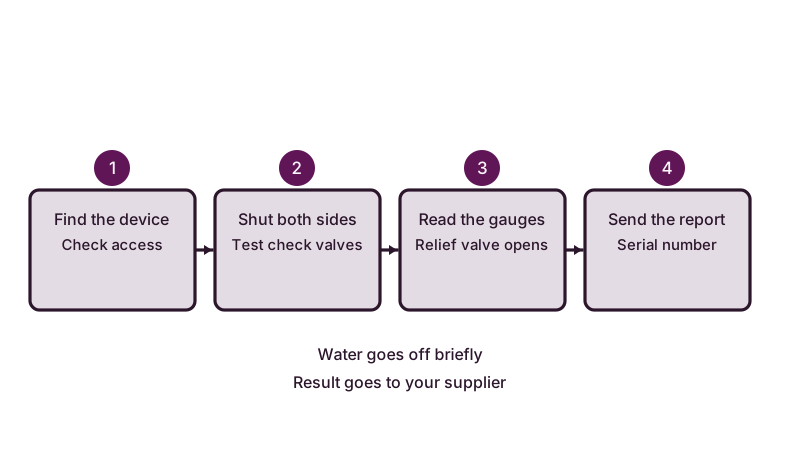
Expect these steps:
- The plumber finds the device and checks access, clearance and the orientation, since an assembly installed upside down or buried in a box can fail inspection.
- The supply is off briefly while each check valve is tested, plus the relief valve on a reduced pressure assembly.
- If a part fails, the plumber can often replace a seal, a spring or a check, then retest.
- A report with the readings, the date and the device's serial number is filled in for the water supplier.
Running the same device over and over for years is where the repair need comes from: hard water leaves mineral deposits on rubber seats. Cal Water's 2025 report for Hermosa-Redondo puts its groundwater at about 502 ppm total hardness, in the report's "very hard" band (300 ppm and above), and notes that hardness can leave mineral buildup in plumbing. Devices on harder water may need new rubber parts sooner.
How do a test, an inspection and a permit differ?
A test measures the device. An inspection is a visual check that it is the right type, in the right place and installed correctly, often done by the water supplier or the city. A permit is the city's approval to install or replace plumbing. Retesting an existing device usually needs none, but replacing or moving one normally does.
Torrance's Building and Safety division lists pipes, fixtures, water heaters and sewer work as needing a plumbing permit, filed online; call (310) 618-5910 to reach the office. Whether swapping a backflow assembly needs its own permit depends on the job, so settle that with Building and Safety or the plumber in advance. Permits in general are discussed under water heater permits.
If your installation was never inspected, say so when you call. A plumber can assess it and tell you whether it is fine as built or needs correction.
What does backflow testing cost?
We do not have a checked price for backflow tests, and published figures vary widely by device size, site and who sets the fee, so we will not quote a number here. A single residential device is usually priced as a short visit; commercial and fire-line assemblies cost more. A plumber should name the price, and any repair parts, before testing starts.
Things that change the quote: the number of devices, the size and type (a double check assembly is simpler than a reduced pressure one), how easy the device is to reach, whether it is indoors or in a box, and whether it passes first time. A failed device means a repair or replacement on top of the test. Fees are examined on backflow device testing cost, and the procedure for homes and small sites on backflow prevention testing.
Do businesses and apartment buildings need different testing?
Yes, usually more of it. Commercial properties, apartment buildings, restaurants, medical offices and sites with fire sprinklers or boilers often have several assemblies, a higher hazard rating and stricter reporting. The supplier may require the test every year and a retest after any repair. A property manager should keep a list of devices, locations and due dates.
Commercial backflow testing covers that world. Residential owners with a sprinkler system or a pool can start on the prevention testing guide. Pressure that runs too high can wear the device as well, so a look at your pressure regulator valve may help.
If you are outside the South Bay, the local areas page shows where we work. We cannot arrange testing in Bend, Oregon or any city outside it.
Common questions
How much time does a visit take?
A single residential device is usually tested in under an hour, plus a few minutes to shut off and restore water. A site with several assemblies, an underground vault or a failed device takes longer. Ask the plumber for a window and clear access to the device before the visit.
Which questions suit a backflow tester?
Find out if your supplier accepts the tester's results, if the paperwork is in the price, what follows a failed device, and what parts cost. Request the figures in writing. If the supplier's notice names an approved list, check the plumber against it first.
Does the owner have to be present?
Somebody has to open any gate or garage that blocks the device and agree to a short water shutoff. If the device is outside and accessible, you can often arrange the test without being there. Tell the plumber about locked gates and pets beforehand.
What follows a failed result?
A failed device must be repaired or replaced, then retested, usually by a date on your supplier's notice. Many failures are worn rubber seats or springs, which are cheap to renew. A cracked body or an assembly that no longer suits the hazard may need replacing, and that may need a permit.
Is this the same program as a water heater or gas check?
No. Backflow testing protects the public water supply. Water heaters get their relief valve and strapping checked, and gas pipe is pressure tested at inspection. The same plumber can often look at all of them, but each has its own rules, which is why a visit may involve separate reports.
Every service and price guide is on plumber in Torrance.
Sources used
Last updated