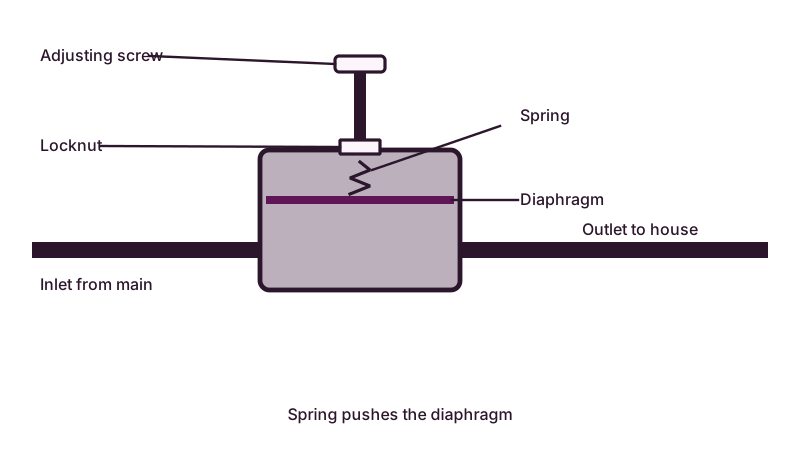
To adjust a regulator, screw a gauge onto an exterior spigot, make sure nothing in the house is running, and note the needle. Then loosen the locknut on the regulator, turn the adjusting screw a little at a time, and recheck the gauge until it sits where you want it. A regulator that will not keep its setting is worn out and due for replacement. This guide belongs to our low water pressure help for Torrance and the South Bay.
How do I set the regulator correctly?
Get a gauge first, because a regulator cannot be set by feel. Attach a hose-bib gauge to an outside faucet and take a reading while the house is idle. Back off the locknut at the top of the regulator. Turning the screw or bolt clockwise lifts the pressure; counterclockwise brings it down. Move half a turn at a time, tighten the nut, and read the gauge again.
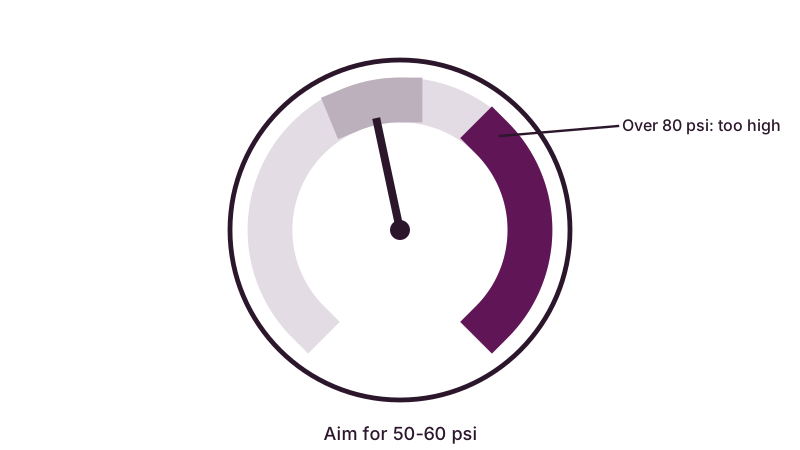
Give the needle a few seconds to settle after each move. Open one tap for a moment and close it, so the valve can react, then take the final reading with every tap shut. Static pressure may not exceed 80 psi under the code, and many households are comfortable around 50 to 60 psi, which keeps showers lively without stressing fixtures.
Brands differ on which way their screw turns, so check the arrow or the printed instructions on the valve body. Do not chase a setting beyond what the gauge shows. If the reading drifts upward overnight with nothing running, the regulator is not holding.
Where does the regulator hide, and what does it do inside?
Trace the water line to its entry point: usually a garage wall, a utility closet, or the spot beside the water heater, right after the main shutoff. The part is a brass or bronze dome, about as big as a large fist. Inside, a spring pushes a diaphragm that throttles the flow, so high street pressure is cut to a steady household figure.
Some homes have no regulator at all. That is common in older houses that rely on whatever pressure arrives at the meter. In some homes it hides in the meter box. Regulator locations lists more places to look.
When the supply line is under about 80 psi, a regulator often is not needed. Beyond that limit the plumbing code of the state requires a regulator, fronted by a strainer.
How do I know my regulator is bad?
Four symptoms point to a failing regulator. Pressure creeps up when nobody is using water. Pressure swings between strong and weak in the shower. Faucets or the dishwasher bang when they shut. Or the regulator body hisses, whines or leaks at the seams.
Check with the gauge. A reading well above what you set, or one that rises while everything is off, means the seat is leaking and pressure is creeping through. A reading far under normal that ignores the screw may be a clogged strainer or a ruptured diaphragm. Banging pipes are covered in water hammer sound.
Before blaming the valve, close and reopen the main shutoff fully. A half-closed main creates the same weak flow. And if the trouble is only at one tap, the cause is more likely a clogged aerator than the regulator. The rest of the checklist sits in causes of low pressure.
What is a regulator's typical working life?
Most last from a decade to about 15 years, though the range depends on the brand, the water chemistry and how high the incoming pressure runs. Hard or gritty water wears the seat faster, and a valve that works hard against very high street pressure also ages sooner.
Treat that range as a general trade figure rather than a promise; the maker's literature for your model is the better guide. Torrance Municipal Water reports total dissolved solids around 696 ppm in its groundwater and about 541 ppm in imported supply in its 2025 report, which is the kind of mineral load that builds scale in small valve passages over time.
If your regulator is past ten years and the house has started to bang or swing in pressure, replacement is cheaper than a flooded wall. Typical costs are in our regulator installation cost guide.
Is replacing the regulator a homeowner job?
You can adjust one yourself, and many people swap one in a few hours. The catch is the rulebook. Torrance may require a plumbing permit, and the code asks for a strainer with the regulator, and a thermal expansion tank is often needed downstream, so heat-driven swelling cannot lift pressure beyond 80 psi. Phone Building and Safety on 310-618-5910 before starting.
Contractor licensing in California begins at $1,000 jobs, and a permitted job is not for a handyperson. Cutting into the main takes care, and a bad joint floods a house. If the main shutoff is old, crusted or refuses to close fully, do not force it; phone a plumber.
For the swap, shut the main, drain the system, cut or unscrew the old unit, set the new one with the flow arrow forward, and test on the gauge. The whole job is described in replacing a pressure regulator. The quote form reaches us when you would rather hand it off, and the Del Amo Plumbing home page has the remainder of our services.
Common questions
How long will a replacement occupy the plumber?
A straight swap in an easy spot typically takes one to two hours. Adding a new regulator where none existed, plus a strainer and expansion tank, can stretch the job to half a day because pipe must be cut and joined. Access, corroded fittings and the age of the main shutoff are the usual causes of delay.
What should be agreed before a regulator job starts?
Ask for the job in writing: the model, the strainer and expansion tank question, who files the permit, and the final total. Ask what the plumber will read on the gauge before and after. Confirm the license number is printed on the paperwork; California requires a contractor license here.
Must an adult be around for the work?
Have someone available to admit the plumber and sign off on the job, because the water goes off at some point. Ask when you book whether the plumber needs you on site the whole time. Leave the main shutoff and regulator clear to reach. Plan on being without water for an hour or two, so fill a pot and finish showers first.
Is high water pressure really a problem?
Yes. Pressure above 80 psi strains faucets, hoses, toilet valves and water heater connections, and commonly lies behind burst supply lines and dripping fixtures. It can also make pipes bang when valves close. A gauge costs little and tells you in seconds whether your house is within the code limit.
Sources used
Last updated