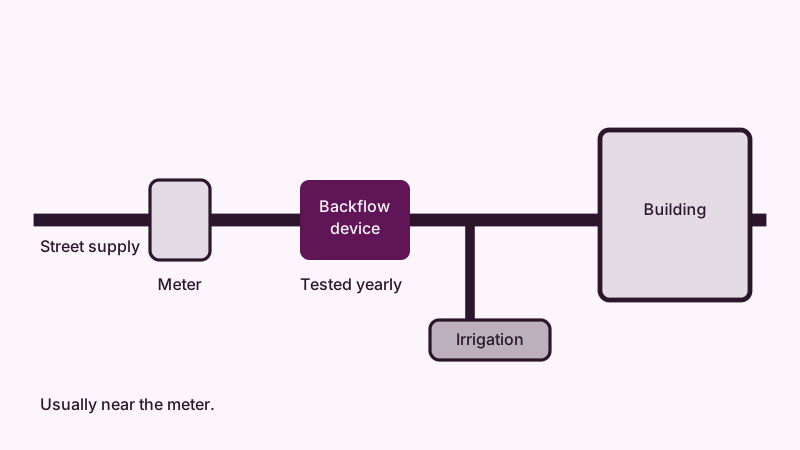
For most homes with one device, plan on roughly $75 to $250 for the yearly test, per one California backflow contractor's published guide, with the visit lasting about half an hour. That price takes in the test and the form. Repairs, replacement and permits are billed on top. Our Torrance plumbing and gas work page shows how this sits among other jobs we arrange.
What does a single backflow test run?
One backflow assembly test typically costs $75 to $250 and lasts around 30 minutes, according to Pacific Backflow's California guide, which also lists annual testing fees of $75 to $200 per device. Device size, access and the count of devices on the property all move the price, so read these as ballpark.
That source is a contractor's marketing page, and its figures conflict in places, so consider them estimates. Testers usually charge per device, which means a property with a lawn irrigation assembly and a fire line pays twice. Some water suppliers add a reporting fee. When comparing quotes, check whether the test, the official form and filing with your supplier are all included. Our backflow prevention testing page explains the test itself.
What exactly is a backflow device, and why does it get tested?
Think of it as a one-way safeguard: a valve assembly that stops dirty or contaminated water drifting backward into the drinking supply. Wikipedia defines backflow as unwanted flow of water in the reverse direction. Testing matters because springs and seals wear, and a device can fail with no outward sign.
Homes with lawn irrigation, a fire sprinkler system, a pool fill line or a similar connection often have an assembly, and many businesses need them. The Los Angeles County Public Works page says not every home needs a device, but irrigation systems and fire sprinklers are typical high-risk settings where one is required. That page serves a county water district, not Torrance, so use it as background and ask your own supplier. Commercial properties are treated on their own page: commercial backflow testing.
Does the state require a yearly test?
Yes. Title 17 of the state's regulations calls for backflow assemblies to be tested annually by a qualified tester. Los Angeles County's Public Works site confirms state law demands this and notes owners may not test their own device. Ask your water supplier for its schedule and forms.
That county page adds that customers who miss a test can get a shut-off notice, and water may be stopped until the test is done and the form filed. It describes the county's districts, so Torrance details come from your own supplier, named on the water bill. Ask who sends the yearly notice, which form is wanted and when it falls due. Save every test report. Buying a property with an irrigation or fire system? Ask for the last report.
Why do some tests cost more than others?
Device type and size, the number of devices, ease of reach, whether the test passes and the supplier's reporting rules all matter. Large or commercial assemblies cost more, and a device in a cramped, buried or flooded box takes longer.
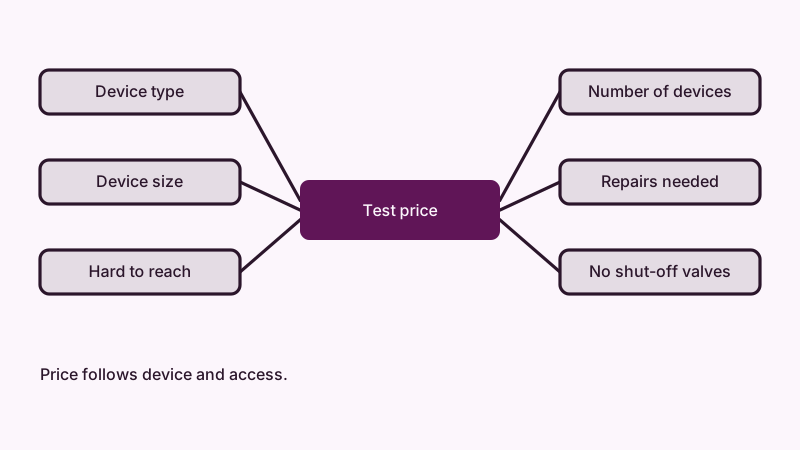
A hard-to-reach device, a locked enclosure, an overgrown box or a device with no shut-off valves can add time. Bundled visits, where one tester checks several devices, often cost less per device. If the device fails, the repair is billed on top. Pacific Backflow also notes that permits can run $50 to $200 and inspection fees $50 to $150, often billed separately and mostly relevant to new installs or replacements. Ask the tester what is included before the visit.
What if the device does not pass?
A failed device usually needs a repair, such as new seals, springs or a check valve, and then a retest. If it cannot be repaired economically, it must be replaced. The tester should give you a written failure report and a quote for the fix, and your supplier typically sets a deadline.
Repair costs depend on the device and the parts. Replacement ranges in the same guide: dual check valves $300 to $700, pressure vacuum breakers $500 to $1,200, and reduced pressure zone (RPZ) devices $1,000 to $3,500, all installed. The guide's own summary and FAQ give slightly different residential replacement ranges, which is another reason to rely on a written quote. A cage to protect the device against theft or damage adds roughly $100 to $300.
Does installing or replacing a device need a permit?
Often yes. Installing or replacing a backflow device changes the water supply piping, which is permitted plumbing work. Torrance takes plumbing permits through its Building and Safety division, with its own application for trade work, and the plumber normally files it. Ask before work begins.
An inspection may follow, and the water supplier may want the new device's test report before it accepts the installation. Torrance Building and Safety, on (310) 618-5910, handles the permit side, and your water supplier handles testing and reporting rules. Hire a plumber who holds the state's contractor license for the plumbing itself; cslb.ca.gov lets you verify it. Backflow testers need the right state credential; ask to see it.
How do I book a tester?
Ask your water supplier whether it keeps a list of approved testers and whether it takes reports online or by mail. You can also arrange a local plumber through us who can test the device or coordinate it, and quote in writing before the visit. Get the test done well before the deadline.
Keep your account number, the address and a note of where the device sits to hand. Photograph the device and its tag, and mention any additional devices. The quote form begins a visit, and the home page shows other services we arrange. For a broader check of the system, inspection costs is worth a read.
Common questions
How often is testing due?
Annually. The Los Angeles County Public Works page points to state law requiring a yearly test by a qualified tester, and the contractor guide says the same. Your supplier can confirm the Torrance schedule and send the form to file. Keep each report on record.
May a homeowner test the device personally?
No. The county page says only a state-qualified backflow tester may perform the test, and owners are barred from testing their own. Either the tester sends the result to the supplier or you receive the form to submit. Ask to see the credential before work starts.
How long is a typical test visit?
About 30 minutes for one device, per the Pacific Backflow guide. Several devices, awkward access, or a failed test needing repair will take longer. Find out beforehand if a retest is included should the device need a small fix on the spot.
What if the yearly test is skipped?
The Los Angeles County page says customers who do not arrange a timely test receive a shut-off notice, and water service may be stopped until the test is done and filed. The rule for Torrance comes from your supplier, so check your notice and call them if you have not had one.
Is a backflow device even required at my property?
Not every home does. Irrigation systems, fire sprinklers and certain other connections are typical places where one is required. Your water supplier decides what applies to your property, so ask them, and ask a plumber to point out any device already installed.
Sources used
- Pacific Backflow, backflow device cost guide for California (contractor marketing page, figures noted as estimates), checked November 2026
- Los Angeles County Public Works, backflow prevention (annual testing under California Code of Regulations Title 17)
- Wikipedia, Backflow
- City of Torrance, Building and Safety permits
- California Contractors State License Board, hire a contractor
Last updated