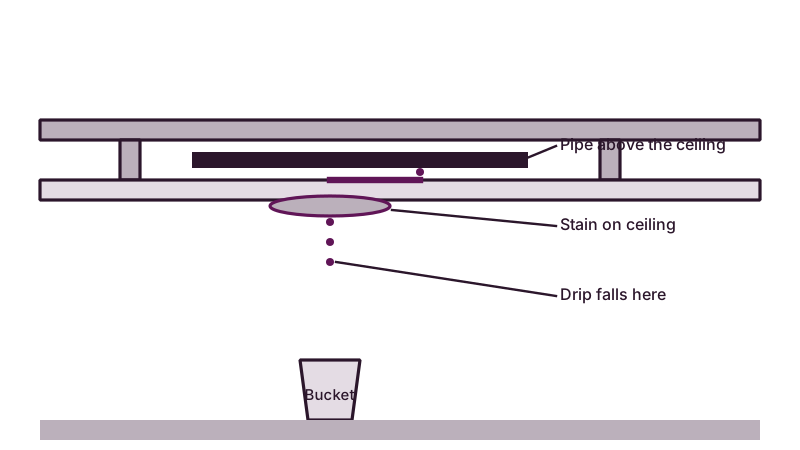
Water falling from a ceiling calls for a closed main valve first, stay out from under the wet spot, and trip the breaker for any room where a light fixture is soaked. Move belongings out, position a bucket under the drip, then work out if the source is a supply pipe, a drain, an upstairs appliance or the roof. The cause decides who fixes it. Our leak plumber guide covers leaks in the rest of the house.
What is the right move when water starts coming through the ceiling?
Close the main water valve first, because a pressurized pipe above will keep pouring until you do. After that, cut power to that area if a light, fan or outlet is wet, and never stand beneath a sagging ceiling. Put a bucket where the water falls and move furniture and electronics aside.
If the drywall is bulging with water, it may be about to drop. One small puncture at the bulge's bottom releases the water into a bucket under control, which beats waiting for the ceiling to come down. Reach in from the side with eyes protected, and never stand under it.
Take photographs of the damage before you clean, and write down the time. Then ring a plumber, plus your insurer if the damage is serious. The damage side is covered in ceiling water damage.
How can I work out where the leak starts?
Study what is above the stain. An upstairs bathroom, kitchen or laundry room suggests a pressurized line, a drain, a toilet seal, a tub or a washing machine hose. A stain that shows only when it rains points to the roof. A stain near an air vent or the water heater closet points to condensation or a heater leak.
Watch the timing. Drips that carry on with all the taps shut implicate a pressurized supply line. Drips that appear only after a shower or flush point to a drain or a seal. The EPA's meter test helps: close all water, record the meter, and compare it after two hours; movement of the dial means a leak.
A small leak is still a leak. A stain that grows slowly, a faint brown ring, or a blister in the paint can hide a pinhole in a copper pipe, and ceiling stains with no obvious leak is the page to read if the source stays hidden.
What if a pipe burst above the ceiling?
Close the main, then let the pipes drain through the lowest tap, and brace for a lot of water arriving for a while. Flooded rooms below must be cleared, and wet insulation sags and can bring the ceiling with it. Call a plumber right away for the repair.
A burst in the ceiling space is repaired by cutting out the failed pipe, replacing it and testing the line. The plumber opens the ceiling just enough to reach it. Patching the drywall and painting are separate jobs. How long it takes to fix a burst pipe depends on access: an open section may be done within hours, whereas a pipe buried in a joist bay needs longer.
The usual failures appear in why pipes burst and burst water pipe basics. In older Torrance homes, corroded galvanized or copper lines are the likely candidates.
How much does a ceiling leak cost to fix?
There are two bills: the plumber and the damage. Bob Vila's water damage guide shows ceiling repair at $350 to $1,250 and a typical water damage restoration at $1,305 to $5,707, averaging $3,455. Drying clean-water damage runs about $3 to $4 per square foot, with dirtier water costing more.

The plumber's repair is often smaller. A simple supply line fix can be a few hundred dollars, and finding a hidden leak costs more, as our leak detection cost guide shows. Stopping the water fast keeps the second bill small. Sudden water damage is often paid by a policy while the pipe is not; insurance coverage for burst pipes explains the split.
How soon does mold grow, and when is it a problem?
Mold can take hold quickly when materials stay wet after a leak. The EPA urges quick leak repairs and thorough drying of everything that got wet, and adds that absorbent materials such as ceiling tiles and carpet may need to be discarded once they turn moldy.
You can usually handle an area under about 10 square feet yourself, according to the EPA. Bring in a professional for bigger patches, heavy water damage, or anything involving sewage or other contaminated water. Run fans, open windows, and cut out any drywall that stays soaked. Check with a health professional first if anyone in the home has health concerns.
Bob Vila's guide puts mold remediation at about $1,100 to $3,400. That price shows why a quick response is worth the effort.
What changes in an apartment or when the stain is below a bathroom?
Renting? Tell the landlord in writing right away and take photos. Civil Code section 1941.1 in California includes working plumbing among the conditions a landlord maintains, which usually makes supply pipe repairs the landlord's job. If the water comes from a neighbor's unit upstairs, ask the manager to contact them, and keep a record of every message.
Renters insurance covers your belongings, and the building's policy usually covers the structure. For a lower-level ceiling in a house, the water normally comes from the floor above or from a drain, and the steps above still hold. When the leak starts after laundry or bath use, look at the drain and the washing machine hoses first.
The quote form sets up a local plumber's visit, and our Del Amo Plumbing home page has the other services.
Common questions
Can a plumber fix a ceiling leak, or do I need a roofer?
A plumber fixes leaks from pipes, drains, fixtures and appliances. A roofer fixes leaks from the roof. Stains that appear only in rain are a roof matter; stains that follow water use inside are plumbing. If you cannot tell, the plumber can usually find out with a meter test and a look.
Is a small ceiling leak an emergency?
A small leak is urgent but rarely a flood. Close the water if it keeps dripping, and put a bucket underneath. A slow stain can mean a pinhole, and it gets worse. Do not wait for the stain to spread, because wet drywall and insulation give mold a place to grow.
How soon will a soaked ceiling dry?
It depends on the amount of water and the materials. Light dampness can dry in a few days with fans and open windows. Drywall or insulation that is waterlogged tends to need cutting out and renewing. The EPA says to dry everything completely, so keep testing for dampness before closing it up.
Can I just paint over the mark?
Wait until the source is repaired and the ceiling has dried. Paint on a damp ceiling bubbles and peels, and it can mask a leak that is still active. Use a stain-blocking primer once the ceiling is completely dry, and then repaint. If the drywall is soft, replace that piece first.
Sources used
Last updated