For a sudden burst, often yes; for a slow leak, usually no. State insurance regulators describe homeowners policies as typically paying where water damage was abrupt and unplanned, and excluding seepage over time, wear and tear, poor maintenance and neglect. We arrange plumbing rather than sell insurance, so read this as background and then read your own policy. The plumbing side is in our overview of leaks and burst pipes.
Is a burst pipe something my homeowners policy covers?
As a rule, yes where a pipe fails abruptly, including resulting harm to walls, floors and belongings, after your deductible and within policy terms. Harm from a leak that dragged on for a long stretch is generally refused. Whatever the wording in your own policy says is what counts, and insurers differ.
The Department of Insurance's guide lists abrupt, accidental water damage among the typical covered causes, and gives the example of a water heater that bursts and damages a wall, with the policy paying for wall and floor. It does not single out burst pipes, so check your own wording. A claim turns on how quick and unexpected the leak was, which makes photographs, the plumber's report and dates valuable. How failures unfold is covered in why pipes burst.
What do policies usually leave out?
Typical exclusions: seepage or repeated leaks, wear and tear or poor maintenance, neglect, mold, flood, and a house left empty for 60 days or longer. The Department of Insurance lists these as common and tells owners to study the exclusions in their own policy.
Flood is its own category: standard homeowners policies leave it out, and flood cover is purchased via the federal flood program. Mold is generally excluded too, so dry a wet area fast. A plumber can record whether a failure was sudden or long-running; that report is evidence for the insurer, not a promise of cover. Do not assume anything. Ask in writing what is covered before paying for large repairs.
Does the policy pay to fix the pipe as well?
Often the policy pays for damage caused by the water, such as drywall, flooring and belongings, while the failed pipe itself can be treated differently. Some policies pay to repair the access needed to reach the break, and some do not. This varies by insurer and policy, so ask which parts of the repair are included.
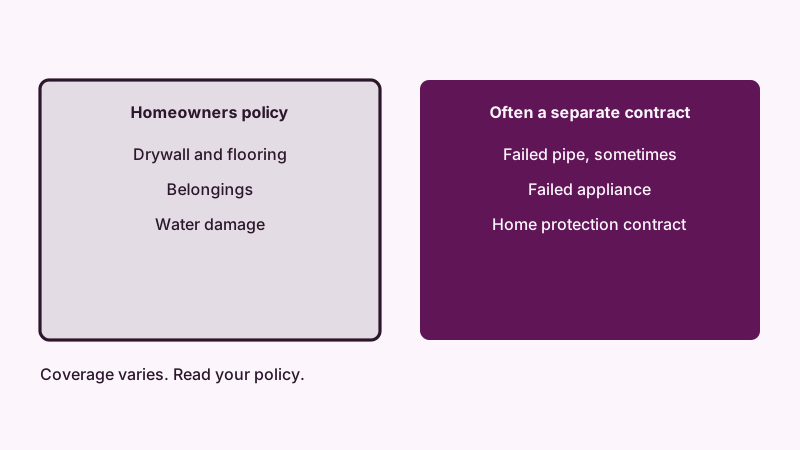
The Department of Insurance's example separates the building damage, which a homeowners policy pays for, from the failed appliance, which a home protection contract (a home warranty) would cover. The same logic often applies to pipes. Expect to pay for the pipe repair yourself in some cases, and to claim for the water damage. Ask whether a small loss is even worth filing against your deductible. If hidden slab pipes are the issue, see slab leaks and repiping for the options, and broken pipes under a foundation covers that case.
What are the first steps in the hours after a burst?
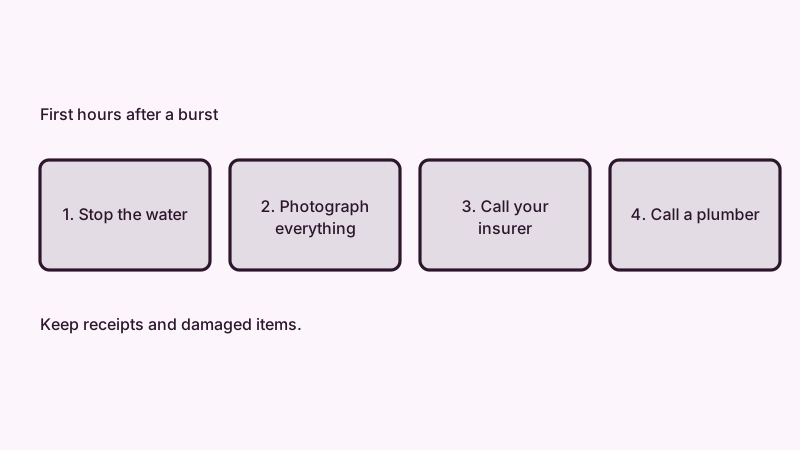
Stop the water, make the house safe, protect belongings, photograph everything, and phone both insurer and plumber. Close the main valve, turn the heater off, and kill the power only when the panel is within dry reach. Policies generally expect you to limit further damage, so save receipts.
Photograph and film before you move or discard anything, and keep damaged goods, where possible, until an adjuster has seen them. The plumber can stop the leak and record what failed and why; ask for an itemized invoice naming the pipe and cause. Notify the insurer promptly, since policies carry notice requirements. If you must move out, save receipts for extra living costs, since loss-of-use cover may repay them. The plumbing steps are in emergency plumbers for a burst pipe.
What does a claim need from me?
An insurer typically wants proof of the loss: photos, a description of what happened and when, the plumber's report or invoice, an inventory of damaged belongings, and receipts. The Department of Insurance suggests keeping an up-to-date home inventory with purchase dates, prices, photos or video, stored somewhere safe away from home.
Be accurate about dates. If water has been leaking for weeks, say so, as misstatements can cause a claim to be denied. An adjuster may inspect, and the insurer may suggest its own contractors; you can still get your own written estimate. The department publishes a Residential Property Claims Guide on its site, which covers water damage, mold and replacement cost. If you dispute a decision, the Department of Insurance offers consumer help at insurance.ca.gov.
How does this work for renters and condo owners?
A renter's policy covers your belongings, while the building and plumbing belong to the landlord or the association. Tell the landlord in writing right away and keep a copy. In a condominium, the association's policy and your own owner's policy divide the cover, so ask the manager which pipes it treats as common property.
Do not hire a plumber for building plumbing without telling the landlord or manager first, unless there is an emergency and water must be stopped. In that case, stop the water, document, and notify. Your own insurer can advise on belongings and additional living expenses. We cannot say who pays in a specific building; the lease or governing documents decide.
Can I prevent the next claim?
Mostly through upkeep: check pressure, replace aging pipe and hoses, learn the main valve's location, and repair small leaks fast. EPA reckons leaks waste upward of 9,300 gallons in the average home each year, and gradual leaks are precisely what policies tend to exclude.
If a plumber finds corrosion or old pipe, take it as a warning and keep a record of every repair. A plumbing job starts with the quote form, and the rest of our services are on the home page.
Common questions
Does California homeowners insurance usually pay for a burst pipe?
Typically, when it is sudden and accidental, and subject to your deductible and policy terms. Damage from long-term seepage, wear or neglect is typically excluded. The Department of Insurance advises reading the exclusions in your own policy, since wording differs between insurers.
What about a pipe that has leaked slowly for months?
Usually not. Seepage or long-running leaks are typically excluded, alongside wear and tear and maintenance problems, whereas a sudden burst is handled differently. Found a slow leak? Fix it promptly and keep records, because delay can count against a claim.
Will my insurer pay for the plumber?
It depends on the policy. Some pay for the cost of reaching and repairing the failed pipe as part of a covered loss, and some pay only for the resulting water damage. Ask your insurer before you commit, and keep the plumber's itemized invoice either way.
Does flood insurance cover a burst pipe?
No. Flood policies cover rising water from outside, and standard homeowners policies exclude flood as well. A burst pipe inside the house is a plumbing loss, handled under a homeowners or renters policy. Flood cover, the Department of Insurance explains, is sold through the federal flood program.
Who do I call first after a burst pipe?
Close the water off, then ring a plumber to stop and repair the leak, and notify your insurer promptly. Photograph the damage before any cleanup. Electricity involved, or gas in the air? Get everyone outside, then call 911 or SoCalGas (1-800-427-2200) when you are clear of it.
Sources used
Last updated