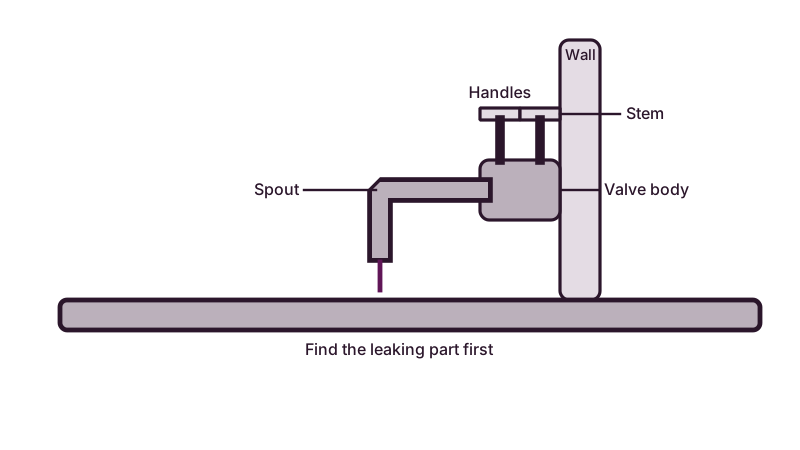
Odds are the culprit is a tired rubber washer in a two-handle tub faucet, or a worn cartridge in a one-lever model, and both are cheap, swappable parts. The EPA figures that a drip every second can waste in excess of 3,000 gallons in twelve months. This walkthrough belongs to our faucet, sink and disposal help, and it stops where a plumber has to step in.
Which part of the tub faucet is actually leaking?
Sit and watch for ten minutes. Drips from the spout point to the internal shutoff seal. Moisture around the handle only while water runs means O-rings or packing. Trickling from the shower head after you lift the diverter means the diverter. A damp wall or ceiling near the tub suggests trouble inside the wall.
Dry everything, then lay a strip of tissue below the spout so any drip leaves a mark. A flashlight shows seepage under the handle trim. In a two-handle set the hot and cold sides are independent, so close one supply at a time, where stops exist, to see which stem is guilty. Diagnosing first saves buying parts for the wrong end.
What tools do I need before I open it up?
A screwdriver set, an adjustable wrench, a deep socket for the stem nut, penetrating oil, silicone plumber's grease, a rag and the replacement part. Shut the water first, at stops behind an access panel or at the main, then run the tub tap until it stops flowing. Put the stopper in so no screw falls down the drain.
Carry the worn part into a hardware store to match it, since threads and lengths differ between faucets. A rag wrapped around the jaws protects the chrome. A main valve that is stiff or weeping is not yours to fix. Around Torrance expect mineral crust, since the city's 2025 report lists about 696 ppm dissolved solids in groundwater and 541 ppm in imported supply; scale locks bonnet nuts. Soak with oil, wait, then turn gently.
How do I stop a dripping two-handle tub spout?
Lever the cap off the offending handle, undo the screw, and slide the handle away. Loosen the bonnet and withdraw the stem. At the tip you will find a rubber washer held on by a small brass screw. Fit an identical washer and O-ring, reassemble, and test hot and cold in turn.
Still dripping? Then the metal seat that the washer squeezes against has pitted. A seat wrench pulls it for replacement, and a dressing tool can smooth a mild case. If the stem itself is chewed up, replace it entire. Since each handle owns its stem, inspect both while the wall is open. A stripped screw, or a stem that refuses to move after oil and a gentle socket, is the moment to put the tools down, because brute force can crack the wall fitting.
What about a single-handle faucet like a Moen?
Take off the handle cap and screw, remove the handle and trim plate, and pull the cartridge out in a straight line, borrowing a puller if it grips. Fit a whole new cartridge, which is an inexpensive part. Moen cartridges are secured by a retaining clip, so pull the clip first and put it back after.
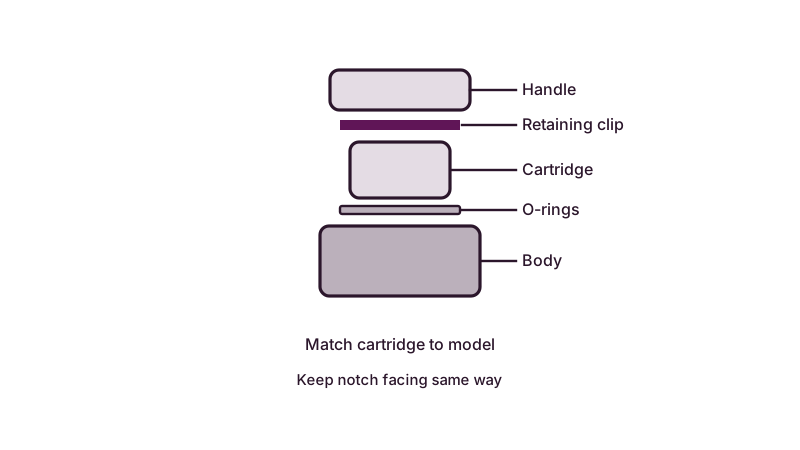
Moen offers several cartridge types, so identify yours from the old one or from the faucet's model number rather than guessing. Other makers vary: some want a hex key, some a bonnet removed. Coat the new O-rings lightly with grease, press the cartridge home until it seats, and align its notch so hot stays on the hot side. Restore water slowly and sweep the handle through its full travel. Leaks that persist mean the wrong cartridge or an incomplete seat. For the shower side of the same valve, see fixing a shower faucet leak.
When is the leak behind the wall, and who fixes it?
A damp wall, or a damp ceiling below it, or a leak that carries on with every handle shut, means the fault lies in supply pipe or the valve body, not the trim. Close the main and book a plumber, since reaching it involves opening drywall or tile.
A spout that dribbles during a shower has a worn diverter. Replacing the spout, which unscrews or loosens with a set screw, often cures it. Leaking behind a wall can rot framing, so staining and soft drywall need prompt attention. What a visit for this looks like is covered in help with a shower leak. California requires a contractor license from $1,000 of work, and a wall repair can reach that mark.
And a drip from the pipes below the kitchen sink?
Slide a bucket underneath, dry every joint, and trace the wet spot with a strip of tissue. Slip nuts on the P-trap and the supply connections are the usual sources. Snug the slip nuts finger-tight plus a further quarter turn, check the washer inside, and swap any brittle braided supply line. A pinhole in metal pipe means replacing that piece.
Then run the tap and disposal and watch again. An old trap that has wept for months may be corroded, and a plastic replacement kit costs little. Taping over a leak and leaving it is no repair. The fuller routine is in stopping a leak in the pipe below the sink. Where a wall pipe leaks or a nut will not tighten, close the angle stop and call; our quote form starts a written price.
Common questions
Can a handy owner do this?
Mostly. Anyone able to close the water and change a washer or cartridge can finish in about an hour. Call a plumber when shutoff valves leak, when a stem will not turn, or when moisture appears inside the wall. A cracked wall fitting is beyond a weekend project.
What does the cartridge cost?
A cartridge is an inexpensive part, and washers cost a few dollars. A plumber adds a visit fee and labor, explained in our service call cost guide. An old, corroded faucet is sometimes better replaced than repaired once the parts add up.
Why does the Moen still leak after a new cartridge?
Usually the part is the wrong model, sits short of fully home, or is rotated so hot and cold swap. A lost retaining clip or a nicked O-ring does the same. Pull it out, compare the number against the faucet, grease the seals and reseat it.
Does a drip really raise my bill?
A little. The EPA says a drip a second can waste over 3,000 gallons annually, and that all leaks together cost a typical home more than 9,300 gallons yearly. Each drop costs next to nothing; hidden damage is the larger risk.
When is a new faucet the better buy?
Choose new when the body is corroded, parts are discontinued, handles are loose, or it has already been patched a couple of times. A new tub valve sits inside the wall, which makes it a bigger job; a plumber can judge if the valve itself has failed.
This guide is one of many on Del Amo Plumbing.
Sources used
- U.S. EPA WaterSense, Fix a Leak Week
- Published faucet repair guides on tub cartridges, compression stems and Moen retaining clips, checked November 2026
- California Contractors State License Board, hire a contractor
- City of Torrance, 2025 annual water quality report
Last updated