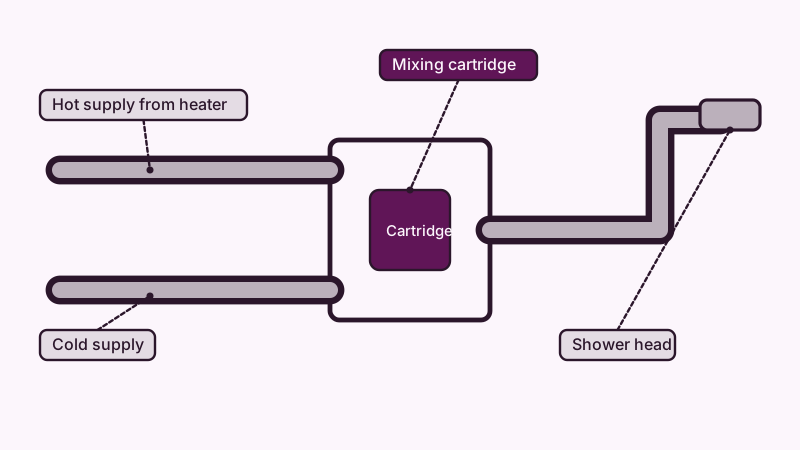
Try this first: let a hot tap run in the kitchen or at a basin. Should that water turn properly hot while only the shower stays cold, the trouble lives in the shower's valve, cartridge or mixer. If every hot tap remains cold or tepid, the heater and its power or gas supply are the suspects, and our page on repairing water heaters is the better place to head. One quick test spares a lot of guesswork.
What leaves just the shower cold when other taps run hot?
A hot sink and a cold shower normally mean a worn or seized cartridge, a failed mixing or anti-scald valve, a crossover that lets cold water bleed in, or a blocked showerhead. Hot water is clearly reaching that bathroom, which clears the heater.
Shower valves blend hot and cold, and many hold a pressure-balancing or thermostatic cartridge that caps the hot side to prevent scalds. Once it wears out or clogs with scale, hot water can fade or the temperature can swing wildly. Replacing a cartridge is routine plumbing, matched to the brand and model, so jot down the name on the handle trim before the visit. Dripping from behind the wall as well? See the page about mending a leaky shower faucet applies.
What does it mean if hot water is gone at every tap?
With no hot water anywhere, suspect a heater without power or a gas flame, a tripped safety cutout, a burnt-out element or faulty thermostat, a shut valve, or a tank that has simply emptied. Work through the basics: breaker, pilot, switch, temperature dial. Beyond those, call a plumber.
Electric units: check the breaker first, and touch the upper thermostat's reset button only once the power is off. Gas units: a pilot that blew out may mean a failing thermocouple, and relighting follows the label on the tank, but stop at any gas smell. A gas smell means evacuating before anything else; once outside you can call SoCalGas on 1-800-427-2200, with 911 for danger. Tankless units flash an error code, and the maker's manual decodes it. For more checks, see why hot water vanishes.
Why does the shower begin hot and then fade, or run out fast?
Hot at the start, then fading: think of a small or tired tank, one element gone on an electric model, or sediment eating into the usable volume. One that lurches between hot and cold suggests a worn pressure-balancing cartridge, or somebody running water elsewhere in the house.
Capacity counts. A 40-gallon tank covers one or two back-to-back showers, and a heavy-flow showerhead empties it quicker. Electric tanks have two elements, so losing one noticeably shortens the hot supply. Rheem lists trouble signs: rumbling or popping from sediment, rusty water, leaks at the base. If the heater is past about 10 years, repair may be a poor bet, as discussed on our water heater repair page. Element swaps are covered in replacing a heating element.
Could scale or hard water be to blame?
Yes. Mineral scale can choke the showerhead, the cartridge and the tank's heating surfaces. Bob Vila advises removing the showerhead and soaking it in vinegar to dissolve deposits. Sediment from a heater never flushed may be eating into the hot supply too.
Cal Water's 2025 report for Hermosa-Redondo lists average local groundwater hardness near 502 ppm, which the report calls very hard, with imported supplies lower. Hardness varies with supplier and neighborhood, so read the report that comes with your bill. Rheem advises an annual tank flush. A softener is another route when scale is relentless. Weak as well as cold? See low shower water pressure.
Does the distance from the heater matter?
Yes. Long pipe runs mean a long wait, since the water that cooled in the pipe must clear before hot water arrives. With the heater tucked at the end of a garage or the bathroom on a second floor, a delay of a minute or more is ordinary and not a fault.
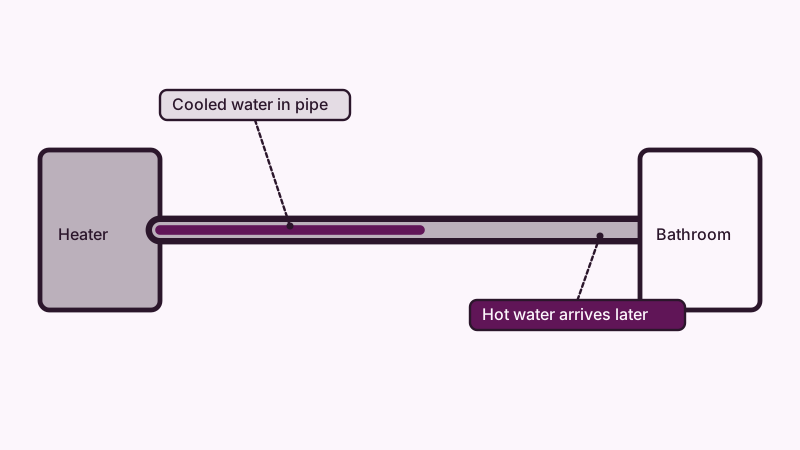
Run the tap in the farthest bathroom and time the wait. A much longer wait than before signals a change: a half-shut valve, a tiring cartridge, a dip tube or heater problem. Insulating hot pipes, a recirculation pump or a small point-of-use heater are the usual cures for slow arrival, and a plumber can price them. If hot water arrives but barely trickles, read about low hot water pressure.
Is a scalding shower a separate problem?
Yes, and a safety one. A shower that suddenly scalds usually means a failed pressure-balancing cartridge or a heater set too high. Switch it off, step clear of the spray and call a plumber. Turning the heater's temperature setting down cuts scald risk, most of all with children or older adults.
Around 120 degrees Fahrenheit is a commonly suggested setting, though the heater's label and the maker's guidance come first. Do not turn a gas control past its marked dial. Until a fault that makes the shower unpredictable is fixed, stay out of it.
When is a plumber needed, and what would it cost?
Call one if the hot side is dead everywhere, the heater leaks, the cartridge swap is beyond you, or gas is involved. Fixr's guide shows thermostat replacement at $100 to $250, an element at $200 to $750, thermocouple replacement at $150 to $325, and pilot repair at $75 to $175.
Those are national numbers read in November 2026; the plumber's own quote is what you pay. A local plumber carrying a state contractor license visits, tests heater and shower valve alike, and says which needs work. Verify the license on cslb.ca.gov. A failed gas pilot assembly is covered under thermocouple replacement. Book through the quote form, while the home page lists our other services.
Common questions
Why does the shower run cold while the sink stays hot?
Most often the shower valve or cartridge is worn, jammed or scaled up. A hot sink proves the heater and the pipes to that bathroom are fine. The plumber can fit a new cartridge, or a new valve if the old one is badly worn, frequently within a single visit.
What would make the shower lose its heat all at once?
If every tap loses heat, think of lost power or gas at the heater: a tripped breaker, an extinguished pilot, a faulty element or thermostat, or a closed valve. Losing it at the shower only suggests the cartridge or a blockage. Do the sink test first, then the heater basics.
Is repair realistic, or must the heater be replaced?
Often repair works, because elements, thermostats, thermocouples and igniters are inexpensive next to a new heater. A leaking tank, or one older than roughly 10 years, tips things toward replacement. The plumber will say which you have once the unit has been tested.
What makes shower water only lukewarm?
Typical causes: a lower element that has failed in an electric tank, the heater turned down, sediment shrinking capacity, a worn cartridge letting in too much cold, or a very long pipe run. Check the tank setting and try another hot tap to narrow it down fast.
Will flushing the tank cure a cold shower?
Only if sediment is the cause, and Rheem recommends flushing once a year anyway. It will not cure a dead element, a bad cartridge or a gas fault. If the heater is old or has never been flushed, a plumber can do it safely and look for other trouble at the same time.
Sources used
- Rheem, water heater lifespan, repair versus replace, and maintenance
- Fixr, water heater repair cost guide, checked November 2026
- Bob Vila, low water pressure causes and fixes (showerhead scale)
- Cal Water, 2025 water quality report for Hermosa-Redondo
- California Contractors State License Board, hire a contractor
Last updated