Lukewarm or icy water from the hot tap points at the heater, and the heater usually has only a few ways to fail: no power, no flame, a safety that tripped, a burnt-out element, or a tank that has simply run out of years. Our water heater repair hub explains how we arrange the repair. The checks below come before any call.
What makes a water heater stop making hot water?
Fuel decides where you begin. A gas tank can lose its pilot or igniter. An electric tank can lose a tripped breaker, a popped safety, a bad thermostat or a dead element. Both kinds can fade from sediment, a split dip tube, or just age. Work out which of those matches what you see before touching anything.
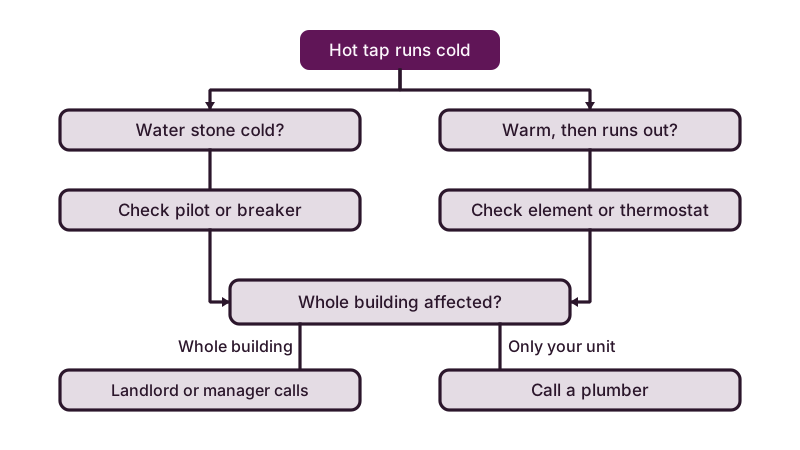
Two questions narrow it fast. Is the water stone cold, or merely weak? Stone cold suggests no heat at all, so power or flame. A burst of heat that dies quickly suggests sediment, a weak element or a low thermostat setting. And is the whole building affected? That matters if you rent.
Age breaks ties. Federal energy guidance gives a tank about 10 to 15 years. Plenty of Torrance garages hold a tank already inside that window. If a tank in that bracket fails, a new one may beat a repair on value.
Where do I look on a gas water heater?
The gas control sits low on the tank, so begin there. If the pilot went out, the sticker on the tank shows how to relight it, provided the room smells normal. A gas odor sends you outdoors first. SoCalGas answers on 1-800-427-2200, and any real danger is a 911 matter. A pilot that refuses to stay lit means a worn part.
Look at the small gas valve on the pipe feeding the tank: handle along the pipe is open, across it is closed. Also check the control dial is not parked on off or vacation. Models with electronic ignition flash a light on the control. The tank label or the maker's manual translates those flashes, and that includes a Rheem or any other brand. Jot the pattern down for whoever comes.
Do not force a seized gas dial or poke at the burner. Gas appliance work belongs to a contractor under California rules. Pilots that die again and again are explained in pilot light repair, including the worn parts behind it.
Where do I look on an electric water heater?
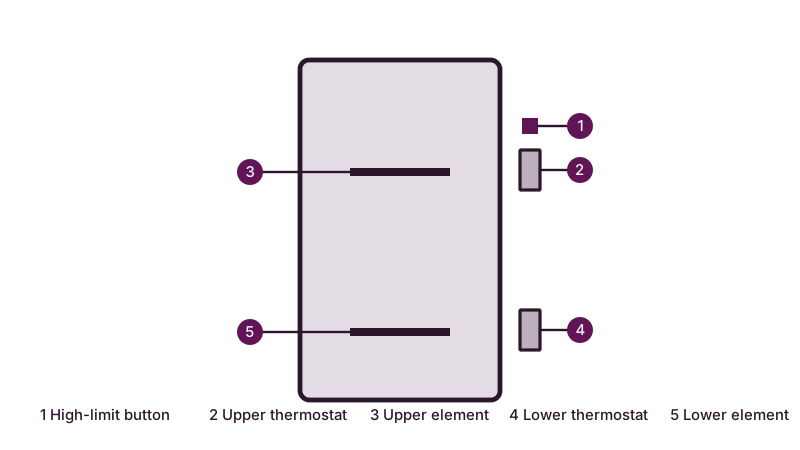
Begin at the breaker panel, where a tripped double-pole breaker causes most outages. Then locate the red high-limit button above the upper thermostat, hidden behind a metal plate, which jumps out when the water overheats. One press is fair. Heat back? Possibly a one-time trip. Trips again? A heating element or thermostat is gone, and a plumber should handle it.
Power and water meet in this tank, so switch the breaker off and confirm it with a tester before you lift any cover. Scorch marks, water or melted insulation inside? Close it back up and stop there.
Electric tanks hold two elements and two thermostats. If the lower element dies, you get a thin supply of hot water that vanishes quickly. If the upper element dies, you get none. Once repairs stop making financial sense, what a new electric tank costs is the page to open.
Whose job is it if my rental has cold water only?
First step is a dated written note to the landlord or manager. California's rental habitability rules expect hot and cold running water, and a dead heater is the owner's repair to arrange. In a house you own, your first call is a plumber. Do not relight a rental's heater if management has told you not to.
Many apartment blocks run one central heater in a mechanical room, so ask neighbors whether they have heat and water. Small closet or balcony tanks serve single units, and tenants usually cannot service those. Boiler-based setups are less common in Torrance than tank heaters, and when a boiler supplies both heating and hot water, a heating specialist may be the right fit.
Unsure what equipment you have? Put the setup in a quote request and the right local business gets lined up.
How urgent is a cold shower?
Urgent, yes; an emergency in four cases: gas odor, a leaking tank, scorching or a burning-hot casing, or water pooling at the base. Cold water alone is only unpleasant. For a leak, shut the cold inlet on top of the tank, or close the main when that valve jams. Gas tanks also get their control turned to off.
The emergency water heater repair page picks up from there. Requests are taken weekdays between nine and five, so describe the leak in full.
One last cheap check: the Department of Energy recommends 120 degrees Fahrenheit as a setting for a storage tank. If someone has turned the dial to its lowest notch, raising it could bring everything back. Wait several hours before judging.
Common questions
The lights work, so why is the hot water gone?
On gas, suspect the pilot, the thermocouple or a closed gas valve. On electric, suspect a tripped breaker, a popped trip button or a dead element. Run through those first, because a part costs far less than a tank and the tank may be fine.
Where should I start?
Sniff for gas first. Then confirm supply, and scan the controls in turn: pilot lit, trip button flat, thermostat at a sensible setting, breaker on. If that tour doesn't bring heat back, stop poking around and book someone to look.
What will it cost to get hot water back?
The cause sets the price. A relit pilot is free, replacing a thermostat, element or thermocouple is a repair call, and a dead tank means a swap. For that last case, water heater replacement cost lists guide ranges for a full swap.
Can sediment stop a heater from making hot water?
It can. Hardness minerals settle in the bottom of a tank, and a thick layer can bury a lower element or smother the burner, so heat output drops or runs out early. Southern California water leans hard. Flushing a young tank helps, but a thick layer in an old one often signals the end.
For the wider picture, start with plumber across Torrance.
Sources used
Last updated