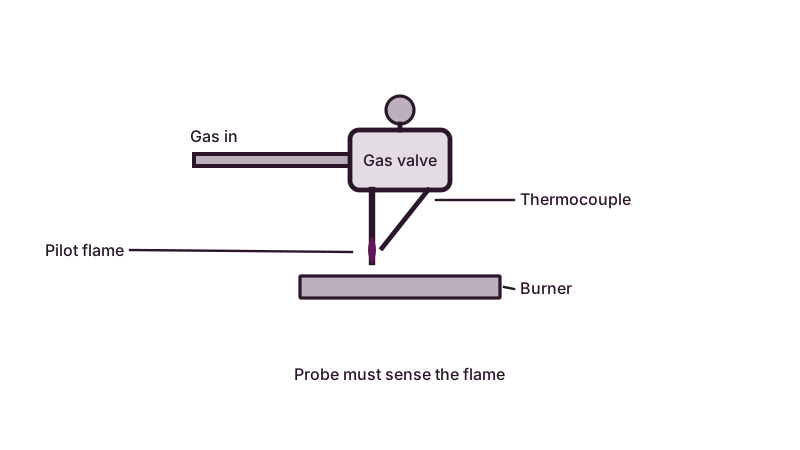
If the pilot keeps dying, suspect the thermocouple first: it is the little probe that confirms to the gas valve that a flame exists. HomeTips prices a plumber's swap between $150 and $300, and Bob Vila puts a failed gas control valve at $300 to $500. The first step is safety, not tools. Our water heater repair overview places a pilot fault among the other ways a heater can fail.
What is the first move with a dead pilot?
Sniff for gas before lighting anything. A smell means touching nothing and walking out; call SoCalGas on 1-800-427-2200 after you are outside, and keep 911 for real danger. With no smell, wait as long as the label on the heater says before you relight.
The lighting instructions are on a label on the tank, usually near the gas control, and they differ between models, so follow yours. Generic steps are: turn the gas knob to pilot, hold it down while pressing the igniter or lighting the pilot, hold for a minute, and release. If the flame holds, move the knob to on. If it vanishes as soon as you release, stop there. Repeating the attempt does not fix a worn part and wastes gas into a closed space.
Why won't the pilot stay lit?
Three causes account for most cases: a worn thermocouple, a pilot tube or orifice clogged with dust, and a draft that blows the flame out. Less often, the gas control valve itself is failing, or the gas supply to the heater is restricted. The pattern of failure points to the cause.
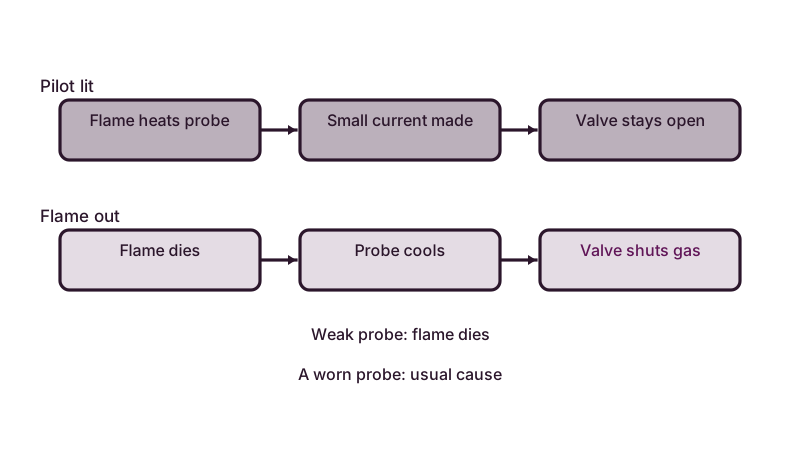
A thermocouple that cannot generate enough current tells the valve there is no flame, so the valve shuts off the gas; that is why the pilot lights while you hold the knob and dies when you let go. A pilot flame that looks weak, yellow or flickering suggests a dirty tube or a draft. If a brand-new thermocouple does not fix it, suspect the gas control valve. Our page on thermocouple replacement explains the part and the job in detail.
Can I swap the thermocouple on my own?
The part is small and cheap, and plenty of owners have fitted one. It is still gas work, though, and replacing a part is not the same as disturbing gas piping. Many people leave it to a plumber because a leak at the gas valve joint is a hazard.
If you do it, turn the gas control off, wait several minutes, and unscrew the thermocouple from the gas valve and the pilot bracket. Fit the new one, relight per the label, and test every joint you touched with soapy water for bubbles. This is where the law draws the line: California regulates gas piping work, and Any job from $1,000 up requires a California contractor license. The gas control valve, the supply pipe and the venting belong to a plumber. When in doubt, call.
What does pilot light repair cost?
In published guides a plumber's thermocouple job is $150 to $300, on a part that costs very little. A thermopile or pilot assembly runs somewhat more, and a replacement gas control valve is $300 to $500. Once a heater is ten years old, a failing valve usually argues for replacing it.
| Repair | Guide figure |
|---|---|
| Thermocouple, part only | under $30 |
| Thermocouple, plumber visit | $150 to $300 |
| Gas control valve, installed | $300 to $500 |
| New standard tank heater, for comparison | see our replacement cost guide |
Those are guides, not quotes. Rheem gives a tank heater 8 to 12 years of life, so set the repair against the heater's age. A $200 thermocouple on a six-year-old tank is good value. A $450 valve on a thirteen-year-old tank is a harder call, and water heater replacement timing may tip the decision.
How many relight attempts are too many?
Few. A pilot that keeps failing has a cause, and every failed attempt can release unburned gas. Try once or twice by the label, then leave the heater off and call. Never bypass a safety device or hold the knob down with tape.
The thermocouple is a safety device: it shuts off gas when there is no flame. A heater whose safety feature has been defeated can fill a room with gas. If you notice a sooty scorch mark around the burner compartment, a flame that rolls out of the opening or a smell of exhaust, turn the gas control off, ventilate and call. Natural gas is odorized, so the smell is a real warning. Treat any doubt as gas.
Why did the pilot go out after an earthquake or a storm?
A shake can trip an automatic gas shutoff valve at the meter, which stops gas to the whole house, and wind or a blocked vent can blow the flame out. After an earthquake, check for a gas smell before you do anything. A tripped valve needs resetting by the right procedure.
If your house has an earthquake gas shutoff, see our guide on resetting an earthquake gas valve. If the whole house has no gas, the heater's pilot is not the problem. If the pilot alone is out and the rest of the gas appliances work, return to the causes above. When no hot water is the only complaint, no hot water at all covers the other possibilities, electric models included.
What about tankless and newer electronic-ignition heaters?
Many newer gas heaters light with an electronic igniter and have no standing pilot, and tankless heaters work the same way, so the advice about thermocouples does not apply to them. They report faults with a blinking code. A code, or a heater that clicks but does not light, is a service call.
Check the manual for what the code means. Common causes of ignition failure in these models are a dirty flame sensor, a blocked vent, low gas flow or a failed igniter. Leave venting and gas supply to a plumber. Our quote form is the place to ask for a visit and written price.
Common questions
Is this a long visit?
A thermocouple swap is brief, often under an hour, and cleaning the pilot tube is quicker. Replacing the gas control valve runs longer because the connection has to be leak-tested. Expect the heater to be down for some of a day, and ask when hot water returns.
Why does the flame vanish when I release the knob?
The gas valve is not getting enough signal from the thermocouple to stay open, so it closes the second you release the knob. A worn probe is the commonest reason. Then come a pilot tube choked with dust or a draft, and finally a failing valve, which a plumber can test.
Which flame color is healthy?
Steady blue is normal. Yellow, orange or flickering can mean a dirty pilot or poor combustion air. Yellow or sooty flames also raise a carbon monoxide concern. See soot, or feel unwell? Switch the heater off, move into fresh air and book service.
Should I turn the gas off if I'm going away?
Many manufacturers describe a vacation setting on the control, so check your manual. Turning the heater to pilot or off saves some gas while you are away. Relight by the label on return, and let it run before you shower. Do not leave a heater lit if you smell gas.
Can a plumber relight it for me?
Yes. A local plumber can relight the pilot, test the thermocouple and check for gas leaks and venting problems in one visit. The service call and parts should be itemized on a written quote. A plumber can tell whether the unit is worth repairing at its age.
For the wider picture, start with Del Amo Plumbing.
Sources used
- SoCalGas, natural gas leaks
- SoCalGas, shut off natural gas in an emergency
- HomeTips, water heater repair cost, checked November 2026
- Bob Vila, water heater repair cost, checked November 2026
- Rheem, water heater lifespan and when to repair or replace
- California Contractors State License Board, hire a contractor
Last updated