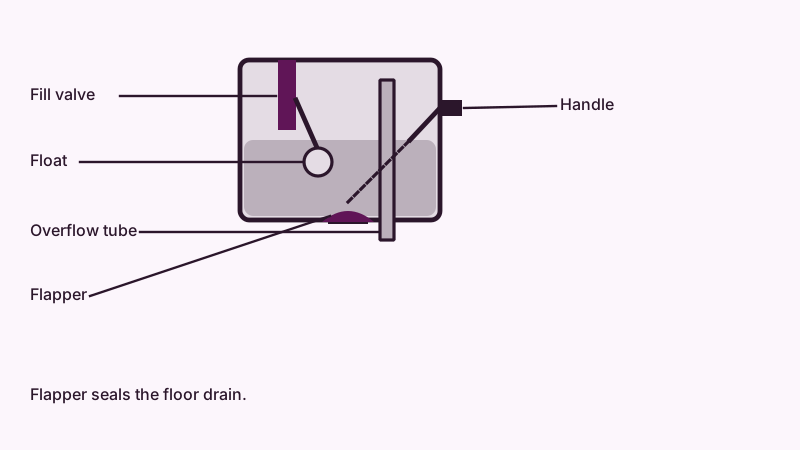
Lift the ceramic lid, press the handle and watch what moves. Only four parts do the work: handle arm, chain, flapper and fill valve. The one that misbehaves names the repair. A handle that waggles to no effect has lost its chain. A fizzle of a flush points to excess chain slack or low water. Water that keeps trickling into the tank points to a leaky seal, or a float that sits too high. For the wider list of jobs, see toilet repair in Torrance. Each symptom below gets its own fix, in the order worth testing.
Why does water keep running after the flush ends?
The cause is either a worn flapper or an inlet valve that never closes all the way. Torrance tap water reads hard in most published figures, and the dissolved minerals crust the seat, so a flapper five or six years old may leak although it looks fine.
Work through these, one at a time:
- Push the rubber down with a fingertip. If the noise stops, you have found the leak.
- Inspect the chain. A hair under an inch of play is plenty; stretched tight it holds the rubber up, and too loose it folds beneath the rubber.
- Read the waterline: about an inch beneath the lip of the standpipe is right, and water spilling down it is wrong.
- Add a squirt of dye to the tank and leave it for ten minutes. Dye showing up in the bowl means the tank is leaking, and the EPA lists this as its leak check.
Flapper replacement has a page to itself, toilet flapper repair, and stubborn cases are covered in the running toilet repair guide.
What makes a flush weak or half-hearted in an otherwise fine toilet?
Three things usually weaken a flush. A flapper that drops early cuts the surge short. A low waterline leaves too little volume to push the bowl clear. And scale can plug the small holes under the rim, so the bowl never gets its full wash of water around the sides.
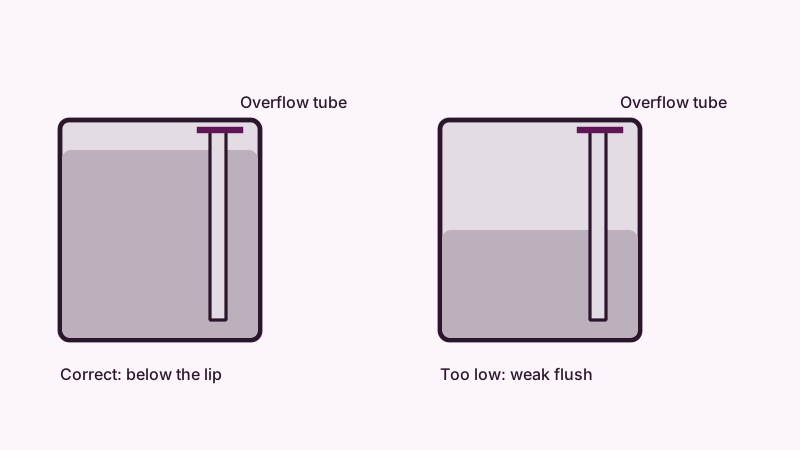
Begin with the chain, since adjusting it is free. Flush and look: the flapper should swing wide and hold until the tank is nearly empty. If it drops early, give the chain another link of play. If the waterline sits below the mark molded in the tank, raise the float. A bent wire dipped into each rim hole clears scale. Should a full tank still drain slowly, the obstruction is further along, and clearing a blocked toilet is the better guide.
What if the handle feels slack or does nothing?
Check inside first. More often than not the chain has slipped off the lever arm, so clip it back on with a little play, then press the handle and watch the flapper lift. If the handle itself wiggles on the tank, the nut behind it has loosened, and on most side-mount styles that nut turns the opposite way from normal: clockwise to loosen, counterclockwise to tighten.
If the handle is stiff, or the plastic arm has snapped, buy a replacement that matches your tank's finish and side. They cost a few dollars. The longer write-up is toilet handle loose and will not flush.
What does the float do, and what if it sticks?
The float is how the fill valve knows the tank is full. A ball on an arm, or a cup sliding up the valve stem, rises with the water and closes the supply. If it snags on the tank wall or its stem is gummed, the valve stays open and hisses, or shuts early and every flush runs short.
Free the float, then bend its arm or turn the adjuster screw until the level lands right. A worn valve is a half-hour swap with a universal kit: close the little stop valve, drain the tank, exchange the valve, snug the supply nut by hand and reopen the water gently. Keep a towel under the connection while you do it, because a drip at the nut is the commonest mistake the first time. The fill valve has its own guide, repairing a toilet fill valve, and the typical labor charge is on fill valve labor cost.
What if the drain opening in the tank floor is damaged?
That opening is the flush valve, and the flapper sits on its seat. When the seat is pitted, cracked or crusted, no flapper can seal, and the bowl loses water slowly all day. Wipe the seat with a soft pad and try again. Pits that remain call for a retrofit ring over the seat, or a whole new valve.
Certain retrofit rings go on without lifting the tank at all, a route set out in the flush valve replacement guide. When you are unsure which flapper shape suits your valve, look at toilet flapper valve types. A crack all the way across the seat is a toilet-replacement conversation.
Common questions
What does a quiet leak cost in water?
On average, leaks waste over 9,300 gallons a year per household, the EPA estimates, and tired flappers feature heavily in that number. A silent tank leak can run for months. To test, note the meter reading, keep every tap off for two hours and compare.
When should a flapper be replaced?
The EPA's advice is a fresh one every five years or sooner. Hard water, and drop-in cleaning tablets, shorten that. A flapper that feels soft, tacky or bent is spent. It is a cheap part, so change it at the first sign.
How long is the plumber in the bathroom?
Moving a chain or float takes minutes. A flapper swap is about ten, and a fill valve roughly half an hour on a first try. A plumber renewing every tank part is usually done in an hour. Timing for your own job is set out on the written quote.
What else should the plumber look at?
Ask for the waterline, the stop valve, the supply line and a dye test at the end to be part of the visit. Ask what happens if the seat is cracked, so the cost of a replacement toilet is quoted before anything continues.
Must I stay home for it?
Yes, an adult, to open the bathroom and agree what the tank shows. The work is small and quiet apart from test flushes, and it needs only a few square feet of floor. Tenants should tell the landlord first, as parts and the stop valve may need approval.
For the wider picture, start with Del Amo Plumbing.
Sources used
Last updated