A wet ceiling, a hiss in the wall, a water bill that jumped: each one says a pipe has let go somewhere. Stop the flow first, then work out where it starts. Urgent visits start at the leaks hub, which covers burst pipes too. Here we compare repair choices, assuming the water is already off.
What should happen in the first ten minutes?
Shut the closest valve, or the house main when you can't tell which one. Empty the plumbing at the lowest tap, cut power to anything within the water's reach, carry valuables out, and shoot photos of the damage for any claim. Calling a plumber comes next, because running water keeps doing harm while you think.
Locate the main shutoff on a calm day. In many Torrance houses it is near the meter out front, or on a garage wall where the line comes in. Turn it once a year, since a valve untouched for ten years likes to seize just as someone panics.
Live wiring and water are a risky mix. Anything electrical that is wet or dripping, whether an outlet, a service panel or a ceiling light, stays untouched. With a dry panel within reach, switch off the circuits serving the wet room. If not, stay out of standing water and ask a professional.
How do I trace a leak to its source?
Follow the wet trail uphill, because water runs along framing before it drips, and a ceiling stain can sit feet from the break. Find the highest damp spot, test pipes with the back of your hand, and listen for hissing. A meter test also works: close every tap, then check if the dial still creeps.
Professionals bring moisture meters, thermal cameras and listening gear that locate a hidden leak without demolition. How that service is priced is in our leak detection cost guide. Pinpointing the leak is almost always cheaper than cutting open the wrong wall.
Bills carry clues too. Per EPA figures, a typical household wastes upward of 9,300 gallons through leaks each year, so a sudden jump on the statement may be your only warning of a leak under a slab or out in the yard.
What are my repair options?
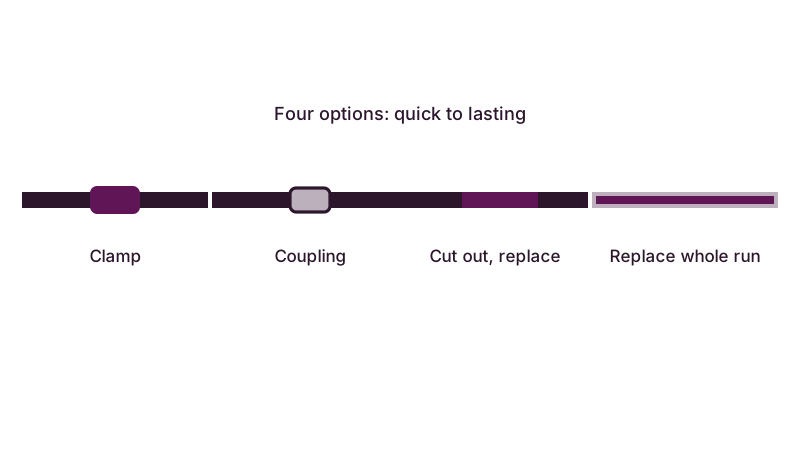
Four choices cover nearly everything: a clamp for a temporary hold, a coupling that joins cut ends, cutting out the failed stretch and fitting fresh pipe, or replacing the whole run. Pipe material, access, the cause and the state of neighboring pipe decide which.
A clamp wraps a rubber sleeve around the break and buys time. A compression or push-fit coupling joins two cut ends with no flame, which helps in tight spaces. Cutting out the bad piece and fitting new pipe gives a lasting result for one split or one bad joint. If the surrounding pipe is just as corroded, a patch merely relocates the failure.
Material matters. Copper takes soldered or fitted joints. Galvanized steel corrodes inside out, which makes one leak a forecast of more. Plastic uses glued or push-fit connections. A plumber chooses fittings that suit the metals involved, because mixing dissimilar metals invites corrosion at the join.
Why do pipes leak in older Torrance and South Bay houses?
Mostly age, corrosion and water conditions. Postwar tract homes in Torrance, Gardena and Lawndale were frequently piped in copper or galvanized steel, and both wear out. Pinholes in copper and rust-through in galvanized pipe are typical at that age, and hard water and high pressure speed the damage.
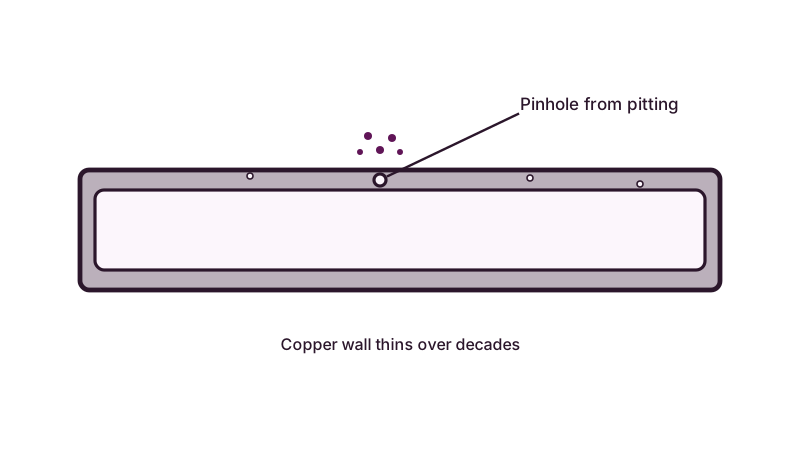
A pinhole in copper looks like a hair-thin spray, or a green-and-white crust on the pipe. A single pinhole in a long run often means the wall is thin elsewhere too. After two or three leaks in a short time, patching is a stopgap, and the question to ask is whether to replace the run.
Beach-city cottages mix eras: old galvanized behind a remodeled kitchen, newer copper or plastic at the fixtures, with leak-prone joints where they meet. Pressure matters everywhere, which is why a plumber may clamp a gauge on the line after a leak.
What will the repair cost?
No trustworthy published price for a single pipe repair turned up, and I won't make one up. The bill has a call-out charge, labor at Fixr's guide rate of about $75 to $150 hourly, parts, and added work if the pipe runs through a wall, ceiling or slab. Your written quote carries the figure that counts.
Costs climb with hidden leaks that need detection, drywall and paint afterward, and pipe in poor shape that forces a longer replacement. Prices stay modest for pipe lying open under the house or on a garage wall, a single clean split, and an early catch.
Ask what the quote lists: the repair, the parts, any wall patching and whether the finish is restored. California law wants a contractor license for plumbing beyond a small dollar limit, and the state board's website offers a lookup. For other jobs, see the plumber cost guide.
Is it safe to repair a leaking pipe myself?
A handy owner can tackle a small leak on exposed supply pipe with a working shutoff, using a push-fit coupling or clamp. Quit if the pipe hides behind drywall, if galvanized pipe looks brittle, if the valve refuses to shut, or when gas piping is anywhere close. A gas pipe leak is never a DIY job.
A gas odor empties the house. Gas emergencies go to SoCalGas on 1-800-427-2200. Where anyone is in real danger, 911 comes first. A water leak beside a gas appliance also calls for a plumber instead of guesswork, and nothing with a flame belongs near a suspected gas line.
Want a plumber? Request a quote and tell us where the leak is, what type of pipe, and when it began. Requests are read weekdays, nine to five. For water pouring now, close the main and read about burst pipe emergencies.
Common questions
Does every leak mean new pipe?
No. One split or failed joint can be cut out and mended, or joined with a coupling. Pipe corroded along its length, or one that has leaked repeatedly, turns patching into a delay and a longer replacement into the better buy. The plumber decides from what the pipe looks like.
How long will a clamp hold?
A clamp is built as a temporary fix. Weeks, perhaps longer, depending on the pipe, the pressure and the clamp, though nobody can name a number. Use it to buy time until a proper repair, particularly on an old pipe.
Why fix a small leak at all?
It does. Even a slow leak can soak insulation, rot framing and feed mold behind a wall, and national figures from the EPA show the volume adds up. Repair small leaks early, and watch your bills for unexplained jumps, since a quiet leak often shows up there first.
Is a leaking pipe an emergency?
Call it an emergency if flow cannot be stopped, or if it nears wiring or a ceiling. Close the main valve first, then pick up the phone. A slow weep at an exposed joint can wait a few days, not weeks. Our leaks page explains where the line sits.
For the wider picture, start with plumber torrance.
Sources used
Last updated