Shut the water first, whatever the plan. Then you have two choices: a temporary patch to get through the night, or a cut-and-replace that ends the problem at that spot. This page walks through both, plus tracing a hidden leak and drying out a ceiling afterward. It sits inside the wider leaks and burst pipes guidance.
What causes pinhole leaks in copper pipe?
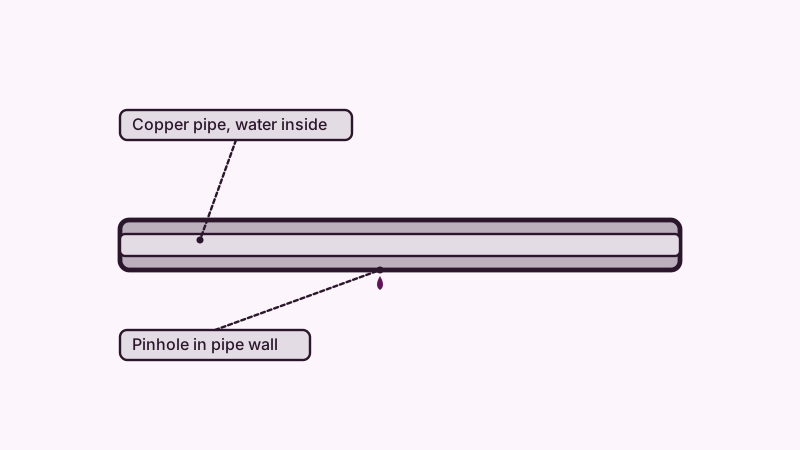
Pinholes are tiny corrosion pits that eat through the pipe wall from the inside. Water chemistry, fast flow at elbows, and leftover flux from installation are the usual causes, and the pits tend to appear in clusters along one run. A single pinhole means a weak spot; several within a few years suggest that the whole line is wearing out.
Copper in postwar South Bay homes is generally decades old, so pitting is a realistic concern in Torrance, Gardena and Lawndale tract houses. Torrance water mixes imported and groundwater supplies of moderate to high mineral content, and the utility's annual quality report lists the chemistry. The inside of a cut pipe often shows the plumber what attacked it.
What holds a pinhole until the plumber comes?
Shut off supply, bleed the line at a tap, wipe the copper dry, then cover the hole. A rubber-backed clamp does well on clean round pipe. Epoxy putty pressed into dry metal cures within minutes, and stretch-and-wrap silicone tape gives a brief seal. Expect hours or days of service, never years.
Turn the water back on gently and look for weeping. If it creeps past the patch, close the valve again and phone for help. Notice, too, that a pinhole is a clue: pitting seldom stops at one place. The burst pipe emergency page covers shutoffs and next steps.
What is the permanent repair?
Take out the damaged stretch and put new pipe in its place. With the line empty, a tubing cutter takes out a few inches around the hole, and a coupling closes the gap: push-fit for a flame-free job, a press fitting using a rented tool, or a soldered sleeve. Soldering wants a bone-dry pipe, lead-free solder and caution with a torch near framing, so many owners hand it off.
Ream the cut ends, polish them bright, and seat the fitting to its depth mark. Restore pressure gently and check every joint for beads of water. Swap the shutoff if it will not close tight. In a finished wall a plumber makes a modest opening and patches it. For the hot line, confirm the fitting's temperature rating.
Is the pipe leaking behind the wall, and where?
Clues: a clammy or warm wall section, blistering paint, a musty odor, trickling noises with every fixture idle, thin pressure, and a meter dial that keeps creeping. The meter check settles doubt. Stop all water use, watch the dial for a few minutes, and any motion means a leak. Every clue gets its own explanation in how to know a pipe burst.
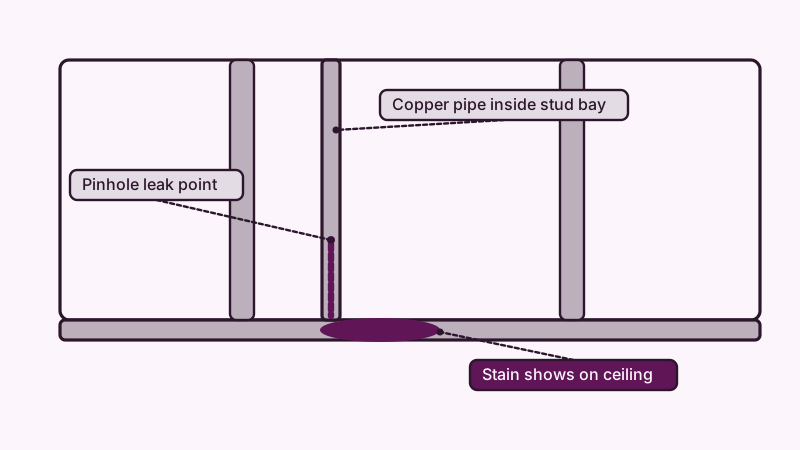
Pinpointing is harder. Plumbers use moisture meters, thermal cameras and listening gear in a service called leak detection, priced in leak detection costs. Random cuts into drywall seldom find it faster.
What dries out a ceiling after a leak?
Cure the leak, then move air. Pull wet insulation, point fans at the area, add a dehumidifier and open the cavity if you can. Drywall soaked beyond a day or two, or sagging, bulging or smelling off, comes out, since mold can take hold fast. The target is bone dry in a day or two.
A bulge full of water can be pierced with a screwdriver over a bucket, standing clear of light fixtures. Switch that room's circuit off first. The full process is in water damage on ceilings.
And a PVC joint that drips?
Glued PVC cannot be snugged up like a threaded fitting. A drip means a weak cement bond or a crack. Dry it, cut the joint out, and rejoin with fresh pipe, primer and solvent cement, or bridge it with a rubber slip coupling that needs no glue. Pressure lines are less forgiving than drains and need full cure time before water returns.
Temporary options appear in PVC joint leaks without cutting. A joint buried in a slab or sealed in a wall is plumber territory.
What about a burst pipe outside the house, or a high water bill?
An outdoor line, such as an irrigation or hose-bib feed, can be isolated at its own valve or at the main until repaired. The yard is less urgent than an indoor flood, unless water runs toward the foundation. Watch for soft or sunken ground and unexplained wet spots, which point to an underground leak.
Usage unchanged but the bill rising points to a leak. EPA WaterSense reports typical homes losing over 9,300 gallons a year, and the meter test catches the loud ones. For causes, read what drives a high water bill.
Common questions
Can I solder a pinhole closed?
Not reliably. Solder does not bond to corroded, thin copper, and the area around a pinhole is usually worn. The surrounding pipe may fail next to your repair. Cutting out the section and fitting new copper or a coupling is the better fix. Prefer to hand it off? Describe the job in the quote form and we send a local plumber.
Do repeated pinholes mean I need to repipe?
Often, yes. One pinhole is a repair. Several in a few years, or a plumber's finding of pitting in the cut section, signals a failing line. Weigh repeat repair and patching costs against replacement before deciding; the reasons for repiping walk through the math.
How long does a temporary fix last?
From a few hours to a few days, depending on the product, pressure and how clean the pipe was. Clamps hold better than tape. Treat any temporary fix as a bridge to a proper repair, and check it regularly. Never leave one behind a wall that is closed.
Does homeowners insurance cover a pinhole leak?
Damage from a sudden leak is often covered, whereas slow leaks and the pipe itself usually are not, and the exact policy wording rules. It also matters how quickly you report it. Document everything, stop the water and notify the insurer quickly. More in insurance and burst pipes.
The rest of our guides start from plumber across Torrance.
Sources used
- EPA WaterSense, Fix a Leak Week
- Repair clamp, epoxy putty and push-fit coupling manufacturer instructions
Last updated