Scale is the chalky calcium and magnesium carbonate that stays once hard water evaporates or gets hot. It is alkaline, so a mild acid dissolves it: white vinegar for most household jobs, citric acid for tougher ones. Below you will find what to use on each surface, what to keep acid away from, and what stops scale from coming back, tied to our water softener installation page.
Is Torrance water really that hard?
Torrance's 2025 city water report lists total dissolved solids near 696 ppm in groundwater and about 541 ppm in imported supply. That shows a heavy mineral load, though it is not a hardness reading. The city blends imported and local groundwater, so hardness varies by address and season. The most reliable way to know is a test strip or a lab test at your own tap.
Neighboring cities served by other utilities, including Cal Water and Golden State Water systems, publish their own annual water quality reports, and their numbers differ. Compare against the report your supplier mails each year. On the USGS scale, 121 to 180 mg/L counts as hard and more than 180 as very hard, so scale is a normal expectation here.
What dissolves scale on a faucet or showerhead?
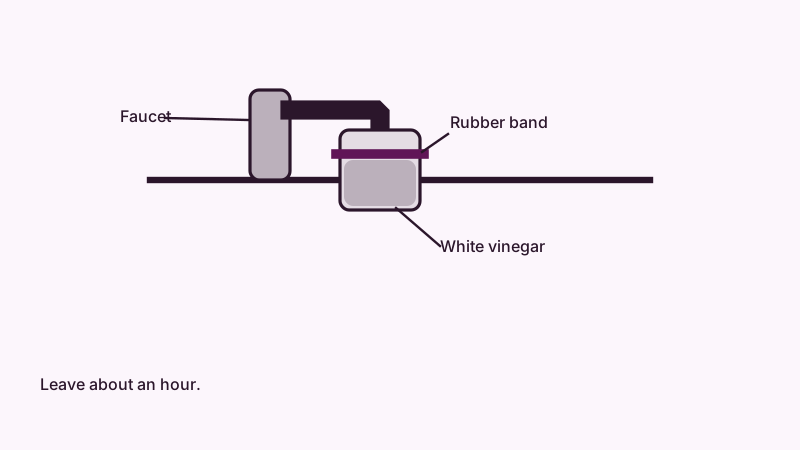
White vinegar. Half-fill a sandwich bag, rubber-band it over the faucet or showerhead so the metal sits in the liquid, and wait an hour or so. Then work at it with a worn toothbrush, rinse, and run the tap. A thick crust may need a second soak or a citric acid solution. Do not leave acid on for long on brass or plated finishes.
For a showerhead you can unscrew, soak it loose in a bowl. Poke open clogged nozzles with a pin once softened. Rubber nozzles often rub clear with a thumb. If the finish is brushed nickel, oil-rubbed bronze or gold-tone, test an inconspicuous spot, since acid can dull some coatings, and follow the maker's cleaning notes.
How do I clean scale off glass, tile and sinks?
Wipe vinegar across the surface, give it several minutes, then rub with a soft pad. Shower glass with cloudy film often needs repeat treatments, and a squeegee after each shower prevents most of it. Citric acid powder dissolved in warm water works as a paste on stubborn patches. Rinse thoroughly afterward.
Keep acid away from natural stone like marble and travertine, and from grout that is soft or old, because acid etches them. Use a stone-safe cleaner there. Keep vinegar apart from bleach and from anything containing bleach or ammonia, because together they release harmful gas. Open a window, wear gloves, and use one product at a time.
What about the scale inside a water heater?
Scale and sediment settle at the bottom of a tank heater, causing popping noises, wasted energy and a shorter life. Draining a few gallons through the drain valve every year flushes loose sediment. Hard crust that has set will not leave that way. A tankless heater can be flushed with a descaling solution and a small pump, usually yearly in hard-water areas.
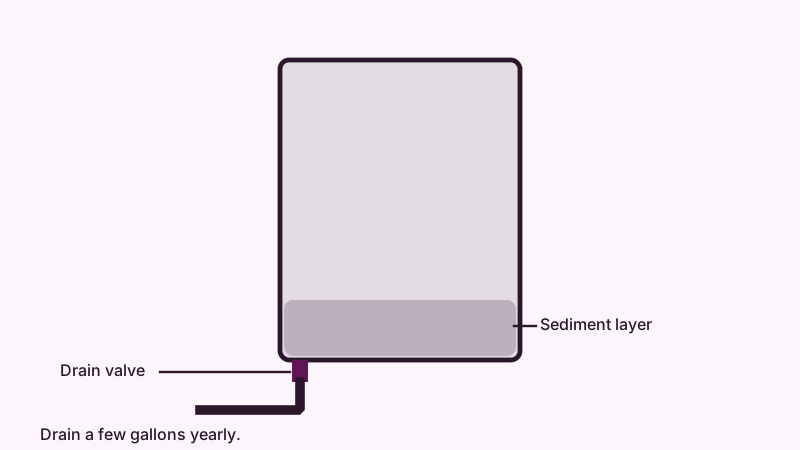
Know your limits: a water heater runs on gas or electricity, and a drain valve that has not moved for years can fail and leak when opened. A plumber can flush it safely and check the anode rod, which hard water eats faster. Read about anode rod replacement and when heaters wear out. For a Navien tankless unit, the details are in our Navien repair guide.
Can scale damage pipes and appliances?
Yes, slowly. Scale narrows pipes, restricts flow and insulates heating elements, so heaters work harder and fail sooner. It also clogs aerators, washing machine inlet screens and dishwasher spray arms. Scale inside old galvanized or copper lines can combine with corrosion and speed up leaks, which is one reason some houses are eventually repiped.
If appliances show chalky buildup or flow has dropped, treat the fixtures first, then consider the cause. Descaling solutions made for dishwashers, washers and coffee makers are safer for those parts than household vinegar, which can degrade some rubber seals with repeated use. Follow each appliance's manual.
What stops hard water scale from coming back?
Removing the minerals before they reach the pipes. A salt-regenerated softener trades calcium and magnesium for sodium or potassium, and that stops most scale. Template-assisted crystallization and other scale-inhibiting systems exist, though they work differently and results vary. Simple habits help too: wipe glass after showers, and lower the water heater temperature to a safe setting.
For choices and sizing, see installing a water softener and softener installation cost. A related question is whether a softener raises your bill, answered in softeners and the water bill, and general upkeep is in preventing hard water scale.
Common questions
Is vinegar safe for every fixture?
No. Vinegar is fine on chrome, glass, porcelain and most plastics for short contact, but it can dull brass, nickel and some other finishes and can harm natural stone, grout and rubber if left on. Test a small area, keep soak times short, rinse well, and check the fixture manufacturer's care instructions.
Why is the crust back within weeks?
The source never changed. Every drop of hard water leaves minerals behind as it dries. Cleaning removes the crust, but only treatment of the water, or drying surfaces after use, prevents the next layer. Hotter water leaves more scale, so heaters and kettles show it first.
Does drinking hard water harm health?
Hard water is generally not considered a health risk, and the minerals involved occur naturally. Its main effects are on pipes, fixtures, appliances and soap performance. If you have a health concern about your water, check your supplier's annual quality report or ask your doctor.
At what point is a plumber needed?
If flow falls throughout the house, the heater rumbles or drips, a drain valve is frozen shut, or you are ready for a softener. A plumber can test the water, size a system and fit it. Give us the details in the quote form and we arrange a local plumber.
This guide is one of many on Del Amo Plumbing.
Sources used
- City of Torrance, 2025 annual water quality report (total dissolved solids)
- U.S. Geological Survey, hardness of water
- Manufacturer cleaning instructions for faucets, showerheads and water heaters
Last updated