Bob Vila's published guide puts whole-house repiping at $1,500 to $15,000 nationally, averaging $7,500, and drain replacement is a separate bill that can push the total much higher. Labor is the bulk of any quote, so house size and pipe access outweigh the pipe material. For the bigger picture of how a Torrance home gets replumbed, start on the Del Amo Plumbing home page and then use the pieces below to price your own house.
What will new plumbing in an old house set me back?
Bob Vila's guide gives $1,500 to $15,000 for a whole house, averaging $7,500, and $2,280 to $5,120 for a three-bedroom house of about 1,500 square feet. Copper costs more than PEX, and drain replacement is priced on top, so the scope matters as much as the house size.
| Part of the job | Guide figure |
|---|---|
| Whole-house repipe, national | $1,500 to $15,000 (average $7,500) |
| Three-bedroom, 1,500 square feet | $2,280 to $5,120 |
| PEX pipe material | $0.40 to $2 per linear foot |
| Copper pipe material | $2 to $8 per linear foot |
| Drains and wall repair | Priced separately, quoted after a camera scope |
These are national figures, so read them as orientation only. The real number needs eyes on your house first, and the written quote sets the price.
What do older Torrance houses usually have inside the walls?
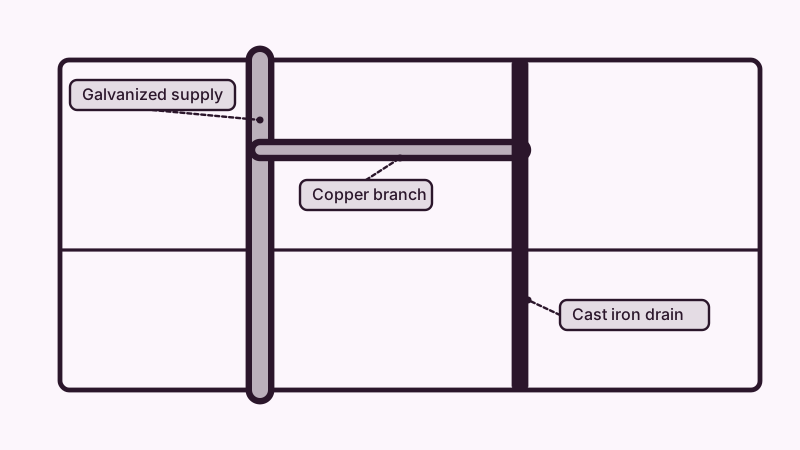
A lot of Torrance went up in the postwar tract-home boom, and houses from that era commonly carry galvanized steel or copper water pipes, plus cast iron or clay drains. None of that is a defect by itself. The trouble starts when galvanized pipe clogs from the inside, copper develops pinholes or cast iron cracks and corrodes.
Every material has its own warning signs:
- Galvanized steel: low pressure, brown water after a night idle, and a bad flow at the farthest bathroom. See galvanized pipe replacement cost.
- Copper: green stains, pinhole leaks in more than one spot and hard-water scaling.
- Polybutylene, gray plastic piping fitted between roughly 1978 and the mid 1990s: cracks at the fittings. See polybutylene pipe replacement.
- Cast iron drains: slow drains, sewer smell, rust staining at joints and repeated stoppages.
Beach-city cottages and apartments may have mixed materials from several decades of repairs, which is why a plumber should trace the layout before any number is quoted.
What moves the price?
Seven levers: house size, bathroom and fixture count, chosen material, slab or raised floor, how much wall has to come open, permits and the condition of the old pipe. Labor is the biggest share, so access usually outweighs material choice.
A raised foundation with pipes running beneath the floor is cheaper to work on than lines buried in a slab or sealed inside finished walls. Two stories, tile and plaster walls cost more to open and repair. Added materials such as new shutoff valves, a pressure regulator or a manifold also appear. Where copper pricing is a question, PEX versus copper compares the two, and repiping cost shows the same job from the pricing side.
Replace it all, or keep patching?
Patch a single section when only that part has failed and everything else tests sound. Replace when leaks surface in several places, pressure has fallen throughout the house or the pipe type is a known failure, polybutylene being the example. Leaks also cost money while they run: EPA says household leaks can waste more than 9,300 gallons a year.
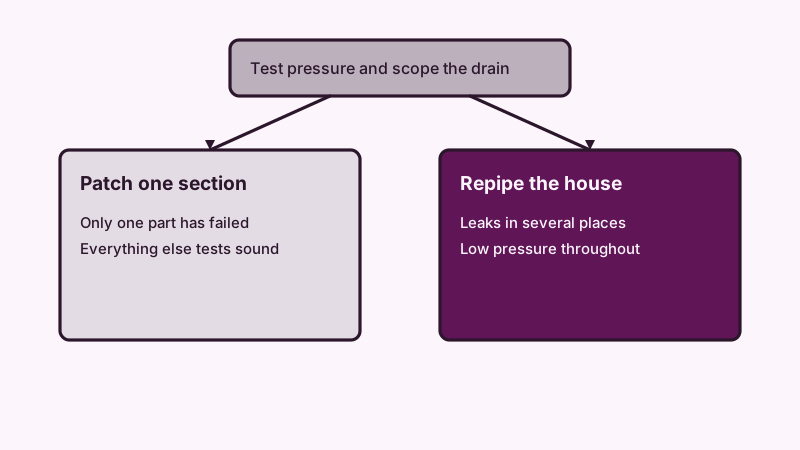
A single pinhole leak does not condemn a house. Three in a year is a pattern. Before deciding, have the pressure tested and the drain scoped by camera. When leaks sit under the slab, rerouting a line overhead or through walls can beat breaking concrete, a trade-off weighed on the slab leak page. The case for going all the way sits in why repipe a house.
Does the price change if I am remodeling?
Yes, downward. With walls and floors already open for a bathroom or kitchen remodel, the access cost mostly vanishes and new lines and drains are cheaper to add. A regional guide prices drain work during a remodel at a fraction of the standalone figure.
Planning a remodel? Involve the plumber before the walls close, so pipework fits the layout. Our bathroom page, plumbing for a bathroom remodel, goes through it. Gas appliances in a kitchen remodel need their own consideration, covered in gas line work in Torrance, since gas piping in California is reserved for contractors and runs through a city permit.
What does the permit and the repair afterward cost?
New whole lines normally need a plumbing permit through the building division of the city, and fees differ from city to city. Opened walls then need patching, texture and paint, which the quote may price separately. Ask whether the plumber's quote includes patching or whether you need a separate drywall trade.
Expect interruptions to your water, and ask how the contractor will handle them. Many houses take a few days depending on size, and some plumbers switch the water back on each evening.
Common questions
Should I do the drains and the supply lines together?
Often yes, because the walls get opened only once. Yet the two systems age at different speeds. If a camera run shows the drains healthy, you can renew the supply lines now and leave the drains for later. For suspected sewer leaks, a smoke test helps, priced in smoke test cost.
Is PEX or copper cheaper?
PEX, usually by a wide margin: Bob Vila lists PEX at $0.40 to $2 per linear foot against $2 to $8 for copper. Some owners prefer copper for its long record. PEX bends around corners with fewer joints and less wall damage, which explains part of the gap.
How long does a full replumb take, and is the house usable?
An average house commonly takes a few days, and finished walls, a slab or a second story stretch that. Most people stay in the house, with the water off for stretches. The schedule for yours comes in the quote that follows the site visit.
Does home insurance cover the cost?
Usually not for worn-out pipe. Policies tend to cover sudden damage rather than gradual deterioration, so a burst may be covered while replacing the old line is not. Your own policy and your insurer have the final word. Some insurers also ask about polybutylene or galvanized piping.
Which questions should the quote answer?
Look for material, fixture count, who patches the walls, who pulls the permit, the schedule and the water plan. Also ask how surprises, such as a damaged drain found mid-job, are handled, so any change is agreed before work continues.
Sources used
Last updated