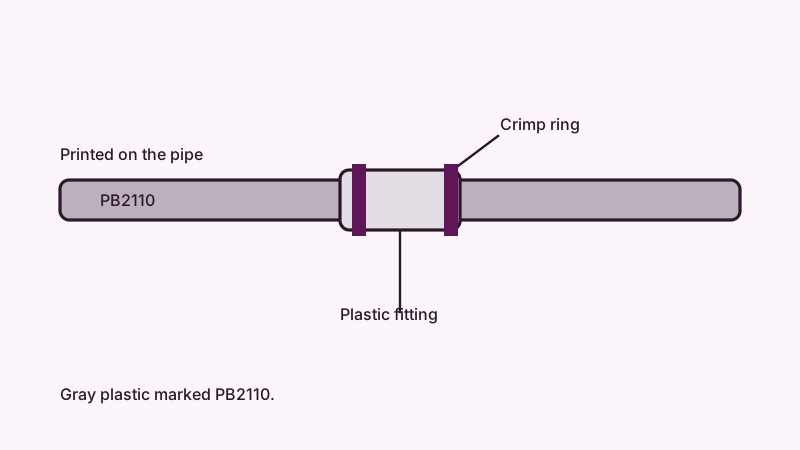
Polybutylene, or PB, is a gray or sometimes blue or black plastic water pipe that went into houses and condos starting about 1978 and ending in the mid 1990s, then fell out of use after leaks and lawsuits. It does not usually burst without warning, but it can split at its fittings and flood a wall. Replacement means repiping the house, normally with PEX. Bob Vila's repipe guide lists whole-house jobs at $1,500 to $15,000 nationally, and houses vary widely. Most Torrance tract homes pre-date the polybutylene years, but it turns up in later condos and remodels. The general method is on repiping a house in Torrance, and this page covers what is specific to PB.
How do I tell whether my pipes are polybutylene?
Look for plastic pipe, most often gray, with the marking PB2110 printed along its side. Check where pipes are exposed: at the water heater, under sinks, behind toilets and at the main shutoff near the meter. Color alone misleads, because modern PEX also comes in gray, so the stamp is what confirms it.
Where to look first:
- The cold and hot lines at the water heater, where pipe is usually exposed.
- The supply stubs under kitchen and bathroom sinks and behind the toilet.
- The pipe at the main shutoff and meter. Outdoor and underground PB is often blue or black.
- The fittings. PB systems used plastic or metal crimp fittings, often with rings of copper or aluminum.
A house built or replumbed in roughly the late 1970s to mid 1990s deserves a look. Cannot find an exposed section? A plumber can trace one, and a pre-purchase inspector will usually check.
Why does polybutylene pipe fail?
The usual explanation is that oxidants in treated water, including chlorine, attack the pipe from the inside and make it brittle over the years. The plastic and acetal fittings can also crack. Failure often starts at the fitting, where a hairline split lets water seep out, and can look sudden when a joint gives way inside a wall.
Not every PB system has leaked. Some run for decades, and others fail in a few years, depending on water chemistry, pressure, temperature and installation. Because the pipe is hidden, damage tends to be found late, behind drywall or under a floor. Keeping the house pressure moderate and hot water temperature sensible helps a PB system, but it does not cure the underlying problem. For urgent leaks, see emergency plumbing in Torrance.
What will replacing polybutylene cost?
Bob Vila's guide puts whole-house repiping at $1,500 to $15,000 nationally, averaging $7,500, and $2,280 to $5,120 for a three-bedroom house of about 1,500 square feet. PEX material costs $0.40 to $2 per linear foot against $2 to $8 for copper. Patching walls and floors afterward is usually a separate line, so the written quote sets the price.
| Item | Guide range |
|---|---|
| Whole-house repipe, national (Bob Vila) | $1,500 to $15,000, average $7,500 |
| Three-bedroom, 1,500 square feet | $2,280 to $5,120 |
| PEX pipe material | $0.40 to $2 per linear foot |
| Copper pipe material | $2 to $8 per linear foot |
| Drywall, floor and paint repair | Quoted separately |
Labor is the biggest share, so access and house size drive the number. A single-story house on a raised foundation costs less than a two-story one with finished walls or a slab. Treat the table as orientation; the number that counts arrives after a visit. The wider pricing picture is in repiping cost and PEX versus copper.
Can I still claim money from a polybutylene settlement?
No. The big Cox v. Shell class settlement of the 1990s let owners claim reimbursement for failed PB systems, but its claim deadline was May 1, 2009. Since then owners pay for replacement themselves, so treat any offer of a current fund with caution.
Some owners have pursued builders or manufacturers, with mixed results. That is a legal question for a lawyer, not a plumber. What a plumber can do is record the pipe type, the leak spots and the repair costs, which any claim would need.
Does polybutylene affect insurance and selling the house?
It can. Some insurers decline cover, raise premiums or want a replacement plan, and buyers or lenders may ask about it. California sellers are expected to disclose known material facts about the plumbing, so ask an agent or real estate attorney how the pipe affects a sale.
Replacing before you list removes the question and leaves a receipt and permit record. If you plan to stay, doing it on your own schedule costs less than doing it after a flood. Water damage from a split joint can exceed the repipe price, and insurers may pay for a sudden burst but not for the old pipe, so read your own policy.
What happens during a repipe?
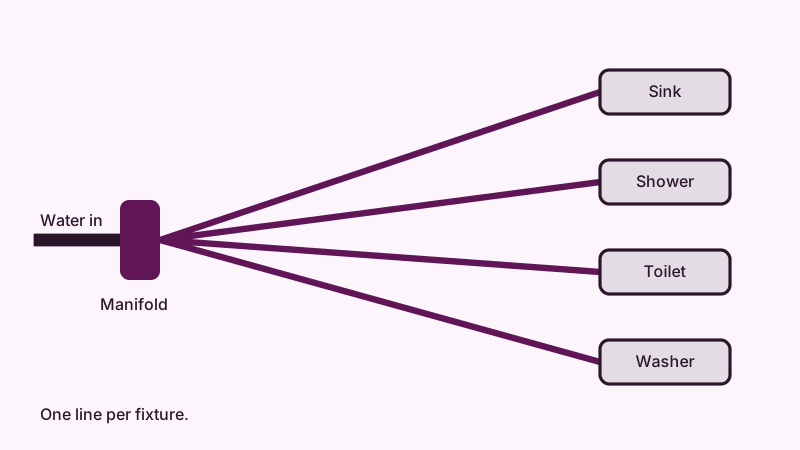
The plumber maps the main and fixtures, closes the water, runs new PEX from a manifold or the water heater to each fixture, replaces shutoff valves, reconnects the heater and pressure tests. Small holes are cut in drywall to pull pipe and later patched. A permit and city inspection normally apply.
A house often takes a few days, with water usually back on each evening. A smaller condo can go faster, but shared walls, shutoff schedules and association approvals can add steps. Find out who patches the walls and who obtains the permit.
Is it safe to leave polybutylene in place for now?
A system with no leaks is one many households leave for now. It is a gamble on a hidden pipe, so take sensible steps: find the main shutoff, look under sinks and at the water heater regularly, watch the meter for creeping use and consider a leak sensor. Replace it before a leak, a sale or an insurer forces your hand.
Damp drywall, a stain, a hissing wall or a meter that runs with every tap closed all call for quick action. EPA says household leaks can waste more than 9,300 gallons a year, and a hidden pipe leak can exceed that.
Common questions
Is polybutylene just old PEX?
No. Both are flexible plastics but different materials with different track records. PEX is the usual replacement and is accepted by California codes when installed correctly. Polybutylene, stamped PB2110, is the older pipe known for failing at its fittings, and it is no longer used in new work.
Should I replace all of it or only the leaking part?
A patch stops one leak, while the rest of the system keeps its age and material. Many plumbers advise a full repipe once PB leaks, since more leaks tend to follow. On a tight budget, ask for the work in stages, starting with lines inside walls.
How long does a polybutylene repipe take?
Most average houses take two to five days, and a small condo can be quicker. The water is off for stretches during that time. Timing, including wall patching, is set out in the written quote you receive after a site visit, so ask for the schedule on paper.
Does the repipe need a permit?
A whole-house repipe normally needs a plumbing permit, with an inspection arranged through the city building office. The plumber should obtain it and book the inspection. Keep the permit number and the final sign-off, since both help when a buyer, lender or insurer asks.
What should the quote tell me?
Ask which pipe and fittings are used, how many fixtures are included, who repairs and paints the walls, who pulls the permit and how hidden damage would be handled. Ask how water will be managed during the work and whether each line is itemized.
For the wider picture, start with plumber in Torrance.
Sources used
Last updated