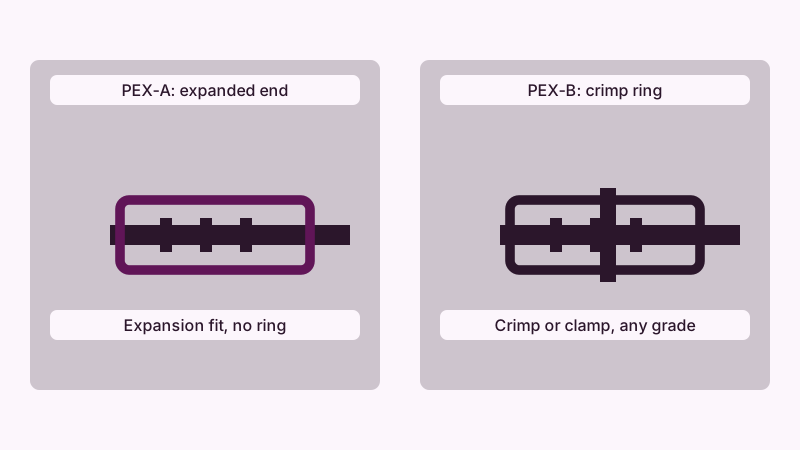
For most houses either grade will do the job, so pick the plumber and the fitting system first and the letter second. The A grade is softer and is joined by cold expansion, which leaves the bore fully open. The B grade is firmer, costs less and goes together with crimp or clamp rings. Planning a whole-house job? Begin with the repiping guide.
How do the two grades really differ?
The letter records the cross-linking method used on the polyethylene, and that shapes how the pipe behaves. A-grade pipe is soft and springs back after bending, while B-grade holds the shape of its coil. Each carries hot and cold water, and each is accepted for homes in California, where the plumbing code has recognized PEX since 2009.
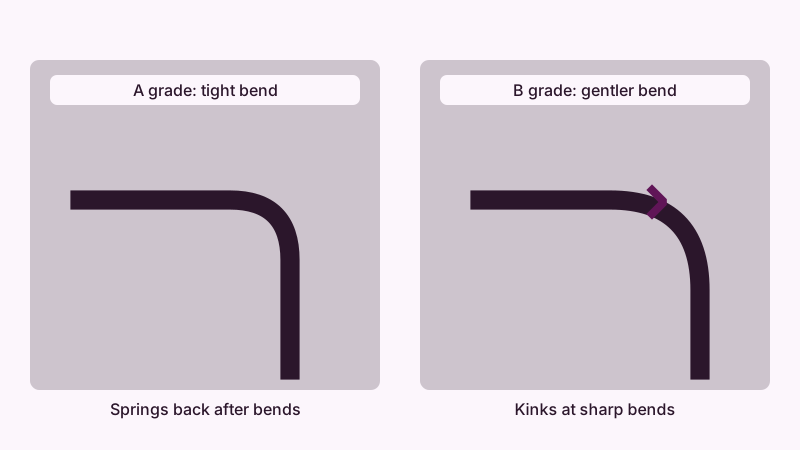
In practice, A-grade pipe turns tight corners with little effort and, one manufacturer says, a kink can be heated out. B-grade needs gentler bends and tolerates kinks less well. You may also see PEX-C, a third method of making it, which is less common in homes. None of the three is a polybutylene, the older plastic that failed at its fittings; PEX is a different material. Our page on replacing polybutylene covers that older pipe.
How do the fittings differ, and does it change the flow?
With A-grade pipe the plumber usually stretches the pipe end, slides in the fitting and lets the pipe shrink back around it. With B-grade, a crimp or clamp ring is squeezed onto an insert fitting. Expansion leaves the inside diameter fully open; inserts narrow it a touch, which can cost a little flow over long runs.
Crimp and clamp rings work on any PEX, including PEX-A, so the pipe grade alone does not fix the method. The cold-expansion system, which follows ASTM F1960, relies on the pipe's memory and is for PEX-A; one maker says its PEX-B can also be expanded, so ask for the specifics instead of assuming. The flow penalty is described as slight in the guides we read. For a house with normal runs and a healthy main, it is rarely noticeable.
Does one grade cost less to put in?
B-grade is usually the cheaper pipe, though sources disagree by how much, so compare written quotes for both on your job. Tools differ too, since the expansion tool for PEX-A costs more than a basic crimp tool. Easier bending can win back some of the difference in labor.
Most of that matters to the installer, not to you. Pipe is a modest part of a repipe, and labor, wall access and drywall repair dominate. Bob Vila lists PEX at $0.40 to $2 per foot against $2 to $8 for copper. Have each plumber price the job using the system they prefer, then compare totals. Our pages on PEX repipe pricing and whole-house repipe cost show the wider picture.
Will one grade outlast the other?
Nothing we read shows either clearly outlasting the other when installed properly, and both are rated for decades. Failures tend to trace back to poor installation, sunlight on exposed pipe or mismatched fittings rather than the letter. Request the maker's warranty terms and the installation rules they attach.
Shield PEX from direct sun, because ultraviolet light degrades it; exposed runs in an attic or garage should be sleeved or covered. Support spacing and approved fittings matter, and one California guide notes that improper PEX installation is among the common reasons repipes fail inspection. A pipe with a long warranty installed carelessly is worse than a plain one installed well.
How should I pick among A, B and copper?
Decide on your walls, your budget and the installer's skill. Pick PEX-A where there are many tight bends, tall two-story chases or finished walls, because the flexibility saves cuts. PEX-B suits open, straight runs and tight budgets. Copper suits owners who want its long track record and accept a higher price.
Put three questions to the plumber: which system and fittings, why that choice, and what each option costs. Someone expert in one method will often quote it lower. Our PEX or copper comparison covers the third option. Still unsure the old lines need replacing at all? why people repipe is worth reading first.
Does the grade change permits or inspection in Torrance?
No. Whichever pipe you pick, a repipe calls for a plumbing permit plus an inspection. Torrance handles these through Building and Safety, with trade permits filed separately, and an inspector views the pipe while it is still exposed. Filing is normally the plumber's task, so see that it is named in the written quote.
California demands a contractor license from $1,000, a threshold a whole-house repipe far exceeds, so check the number on the CSLB site. To have a local plumber see the house and price it, send the quote form and mention your pipe preference so both options get priced.
Common questions
So which grade wins?
A-grade is more flexible and pairs with expansion fittings that keep full flow, though it often costs more. B-grade is stiffer, cheaper and uses rings. In most houses either gives a sound result when fitted correctly, and the walls and the installer should break the tie.
Can both grades appear in one house?
Fittings must suit the pipe and the manufacturer's system, so mixing is possible where the fittings and the code allow it. Most contractors stick to one grade per job, for simplicity and warranty reasons. Ask the plumber what is planned and why, and get it noted on the quote.
Does PEX suit drinking water?
Yes: it is accepted for potable water in California homes and is a common residential supply pipe today. Look for pipe marked as approved for potable water. If you have concerns about taste or odor in a new system, flushing the lines for a while after the repipe is the usual first step.
What about freezing?
PEX handles a freeze better than rigid pipe since it can stretch, and the A grade is described as the more freeze-resistant. Torrance rarely sees hard freezes, but exposed lines in a garage or attic should still be insulated or protected from the sun.
Does the grade affect resale or insurance?
Buyers and insurers usually care that the pipe is permitted and installed to code, not about the letter. Keep the permit, the final inspection record and the plumber's invoice. Ask your insurer if they have any specific rule about plastic supply lines.
The rest of our guides start from plumber across Torrance.
Sources used
Last updated