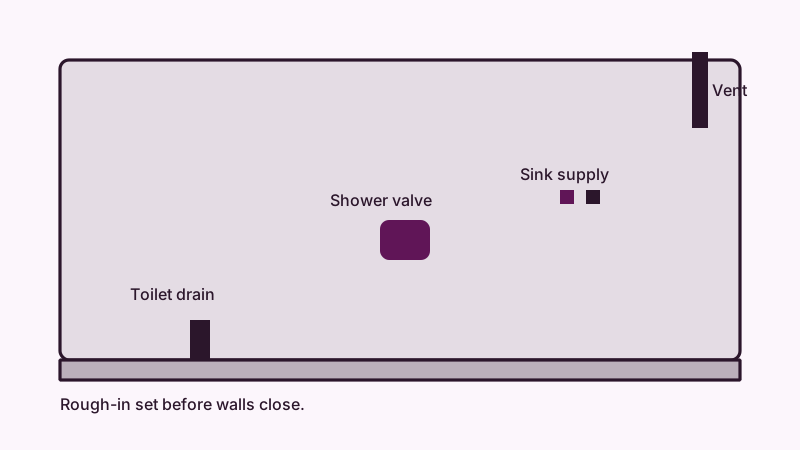
Settle the plumbing layout before tile, vanity or lighting choices. Drain slopes, vent paths and supply lines decide where a toilet, shower and sink can go, and every move of a fixture costs more than a swap in place. Before the plan is final, a plumber can walk the house, and the Del Amo Plumbing home page is where that visit gets requested.
What does the plumber do in a bathroom remodel, and in what order?
The plumber works in two visits around the carpenter. Rough-in comes first, once the old fixtures and wall finishes are out: supply lines, drains and vents are set to the new layout and tested. After drywall, tile and cabinets, a second trip, the finish, sets the toilet, faucets, shower trim and drain assemblies, then tests everything.
Between those visits the city looks at the rough-in while the wall is still open, which is when a hidden flaw costs least to correct. A typical sequence:
- Demolition and a look at the old pipe.
- Rough-in plumbing and pressure test.
- City inspection of the rough-in, where a permit applies.
- Waterproofing, drywall and tile by other trades.
- Finish plumbing and final inspection.
What does moving a toilet, shower or sink really involve?
Moving a fixture means moving its drain, and drains need slope and a vent. A sink can shift a few feet with modest work. A toilet needs a larger drain, and moving it far can mean opening the floor. A shower relocation touches the drain, the supply valve and the waterproofing. Each extra foot adds labor, so keeping the footprint saves money.
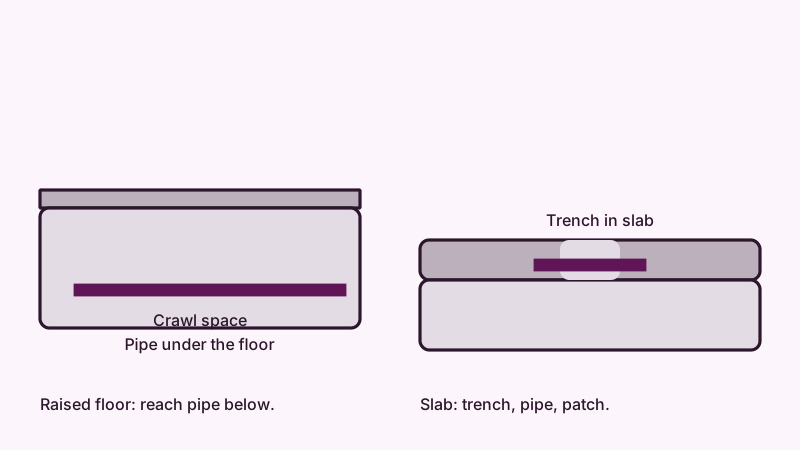
Slab-on-grade houses, which are common among Torrance's postwar tract homes, add a step. If the drain must change, a plumber cuts the concrete, trenches, lays new pipe and patches. Raised-floor homes, such as many older beach-city cottages, allow access from a crawlspace. Learn which foundation you have before pricing anything; it moves the budget further than any fixture choice.
What should I check about the existing pipes before I start?
Look at what feeds and drains the room. Galvanized steel supply, polybutylene plastic, or cast iron drains from the postwar era are all common in South Bay homes and may fail during or after a remodel. A wall that is already open is the cheap time to swap a doubtful section. Have the plumber inspect visible pipe, test pressure and mark every shutoff.
If the pipe in the wall is galvanized, replace at least the bathroom branch, since a new faucet on old steel often reveals low flow. See why homes get repiped for the signs. For a short stretch of old pipe, a bathroom-only replacement is generally less disruptive than a whole-house job. If you are replacing only fixtures, ask the plumber to swap the old shutoff valves under sinks and behind toilets, cheap to do now and annoying to do later.
What permits does a bathroom remodel need in Torrance?
Plumbing changes, meaning new or moved drains, vents and supply lines, usually call for a city permit, with an inspector checking the work before walls close. Like-for-like fixture swaps are treated differently, so ask the counter before assuming. Whoever applies for the permit should also book the inspection, and plumbing above a small job size needs a contractor under state law.
Check your city's rule if you live next door in Lomita, Lawndale, Gardena or Redondo Beach, since each has its own division. If the remodel moves or replaces the water heater, see permits for water heater work. An unpermitted remodel can lead to trouble with insurers and buyers later. If the remodel touches gas, such as relocating a gas water heater or running a line for a heating appliance, that piping is contractor work with its own inspection, covered on our gas plumber page.
What shower, toilet and faucet choices affect the plumbing?
Choose fixtures before rough-in, because valve depth and drain location depend on the product. For showerheads, EPA puts standard showerheads at 2.5 gpm and WaterSense models at 2.0 gpm or less, and California's rules for new fixtures are tighter than the national standard. Toilets sold in California are low-flow, and the shower valve should guard against scalding by pressure balancing or thermostatic control.
Rain heads, body sprays and extra spray points call for more flow than the old pipe may deliver, and a small tankless or aging tank heater can run short on hot water. Ask about water pressure and heater capacity at the planning stage. Our pages on replacing a toilet and installing a faucet show what those jobs cost on their own.
What will the plumbing portion run?
Whether fixtures stay in place decides most of it. A plumber's hourly rate applies, and a straightforward swap-in-place is a day or less of plumbing labor, while a full relocation can take several days across two visits. Pipe replacement, concrete cutting and a new shower valve add to the total. We have no firm price for a typical bathroom without seeing the house, so use a local written estimate.
For general rates, see what a plumber costs. Ask every bidder if the figure covers permit, shower valve, drain parts and finish trim, and who buys the fixtures. Fixtures you buy yourself must match the plumber's rough-in.
Common questions
When should I hire the plumber?
During planning, before you order fixtures. The plumber can confirm drain locations, supply sizes and valve depths, and flag any problems that change the budget. Hiring late, after the layout is fixed, limits options and sometimes forces expensive changes. A first visit to look at the existing pipes is worth far more than the visit fee.
Can the toilet go anywhere I want?
Not anywhere. The toilet needs a drain of the right size, a vent, a slope back to the main line and clearance around the bowl. Moving it a short distance is routine. Moving it across the room may need an open floor, or a different drain route. The house itself sets the limit.
Do I need to replace the water supply lines?
Not always. If the existing pipe is healthy and the shutoffs work, new fixtures can connect to it. Galvanized, brittle, weeping or sagging lines deserve replacement while the wall stands open. Request a pressure test before and after, so a leak shows up before tile hides it.
Who handles waterproofing and tile?
Other trades. The plumber installs the valve and drain, and the tile setter handles the waterproof layer and finish. They must coordinate, because the drain flange height and valve depth matter to the waterproofing. Ask the contractor leading the project who confirms them. A leak that appears later will lead back to whoever installed that layer.
Sources used
- EPA WaterSense, showerheads
- Torrance Building and Safety division, for permit questions before work starts
Last updated