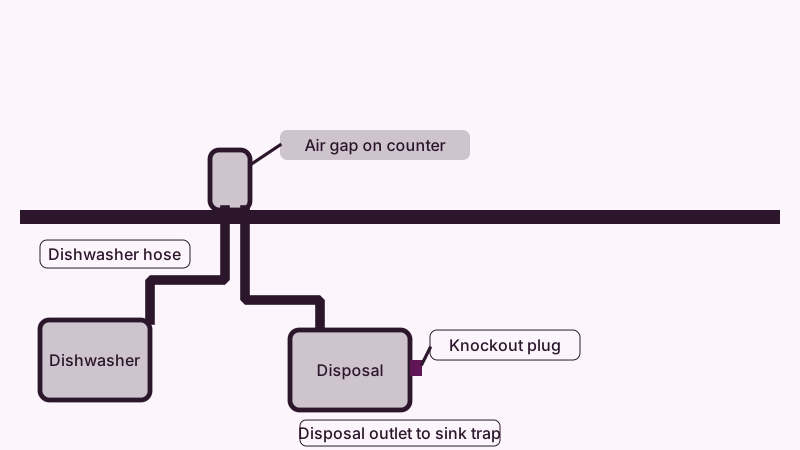
A machine left sitting in a puddle of gray water has one of about six problems, and the first three cost nothing to check: the filter, the disposal's knockout plug and the disposal itself. The drain hose, an air gap and the pump come after. When none of those is at fault, the shared kitchen drain is clogged and that is plumbing work, much like the problems on our clogged toilet page.
Why won't my dishwasher drain after a cycle?
Most often something is blocking the path out: a filter packed with food, a hose with a kink, a disposal that is full, or a blockage in the sink drain the dishwasher shares. A dead drain pump or a stuck check valve is less common. Start with whatever you can see and reach, then move down the line.
Whirlpool lists a dirty filter first. Food, wet label paper and popcorn husks collect in the sump and slow the outflow until nothing leaves. After that come the disposal connection, the air gap or high loop, the hose, a check valve and the pump itself. The order matters because the early ones are free and quick and the late ones involve a repair visit or a plumber with a drain machine.
What should I check first, in what order?
Disconnect power: switch the breaker off or unplug the machine. Bail out the water with a cup, then mop up. Lift out the lower rack, remove the filter and rinse it under a tap. Look in the sump for debris, glass or a bit of label. Then run a short cycle and see if it drains.
Wear gloves, because broken glass and food scraps sit in the sump. A soft brush clears the filter mesh. If the puddle is still there after a rinsed filter and a quick cycle, run the sink disposal on cold water for twenty seconds, since a full disposal backs the dishwasher up. Do not pour bleach or caustic drain cleaner into a dishwasher. They do not belong there, and a plumber who later opens the line has to deal with the chemical in the water.
Is the disposal to blame?
Yes, in two ways. A jammed disposal, or one packed with waste, holds the dishwasher's water. And a new disposal ships with a plastic plug sealing the dishwasher inlet that the installer must knock out. If it was missed, the dishwasher cannot drain at all, and a brand new setup that has never drained points straight at it.
Whirlpool's guide describes the plug and says to remove it from inside the disposal, not let it fall onto the blades. Pull it out with pliers after unplugging the disposal and switching its power off at the breaker. Keep hands out of a disposal that still has power. Our page on installing a disposal with a dishwasher lays out the connection order if the unit was fitted recently.
What do an air gap and a high loop do?
They stop dirty sink water from siphoning back into the dishwasher. An air gap is a little chrome or plastic cylinder on the sink deck; a high loop is a hose lifted under the counter before it heads down to the drain. When either one is clogged or missing, water pools in the machine or sprays from the air gap.
Open the air gap cap on the counter and look for gunk. A bottle brush or a straw clears it. Some houses have a high loop in place of a gap, and that loop must sit high enough to work. Some installers fix the hose too low. Which one a Torrance kitchen needs depends on the city's rules and the plumber's judgment, so raise it whenever the work is permitted.
How do I tell a sink-drain clog from a dishwasher fault?
If the sink is slow or gurgling too, or water from the dishwasher shows in the sink basin, the shared drain line is clogged. Grease and food slow-build in the pipe between the sink trap and the wall. Cleaning that line is a drain job, not an appliance job.
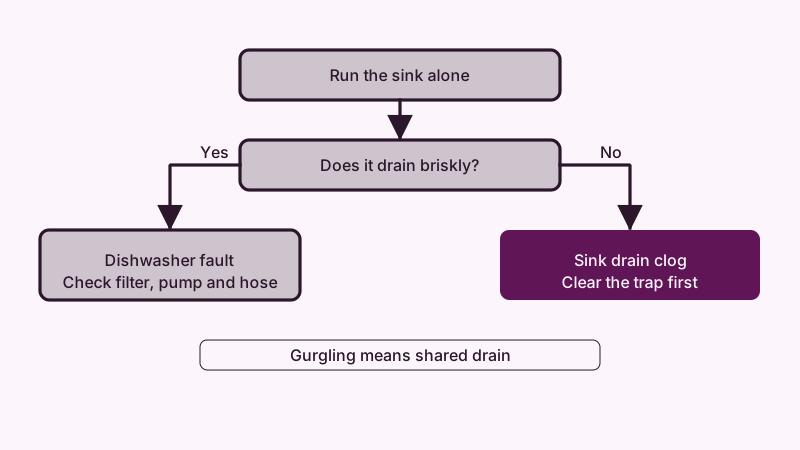
Run the sink on its own: does it empty briskly? If not, work on the sink first. The full routine is under unclogging a kitchen sink, and the reasons behind a sink that drains slowly are set out separately. South Bay houses from the postwar decades often have iron or galvanized kitchen drains that narrow with scale and grease, so a stubborn clog there tends to need a cable machine, not a plunger.
Who fixes it: a plumber or an appliance technician?
A plumber suits a slow sink, a disposal problem, an overflowing air gap or a clog that returns after cleaning. An appliance technician suits a pump that hums but will not pump, an error code, or the drain pump hums but will not pump, the machine throws an error code, or the check valve inside the unit has failed.
Get a written quote first. Anything in the wall, under the sink or in the drain line is plumbing, and in California work from $1,000 upward needs a contractor license. What a visit fee covers is explained in plumber service call costs. To have someone local check the shared drain, send the quote form.
Common questions
Can I run the dishwasher again if it did not drain?
Not until you find the cause. Water already in the machine can overflow onto the floor if another cycle fills it. Bail out the standing water, check the filter and the disposal, and run only a short drain cycle to test. If it still holds water, leave it off.
Is vinegar and baking soda a fix?
It cannot shift a true blockage. It can loosen light grease in the hose, but it cannot dissolve a lodged piece of food or a jammed disposal. A rinsed filter and a clear sump do more. Never combine it with a chemical drain cleaner, because the mix can splash and burn.
What if the dishwasher water appears in the sink?
Water showing in the basin while the machine runs means the common line is partly clogged, or the air gap is spitting it out instead of passing it on. A full disposal does the same. Clearing the disposal and the sink drain usually ends it.
What does a dead drain pump look like?
You hear the pump hum but no water leaves, or you hear nothing at the drain stage, and the filter, hose and disposal are clear. Pumps can jam on glass or a broken label. A technician can test and replace it; that falls under appliance repair.
Does the dishwasher hose need to go to the disposal?
Not always. Many machines connect to the disposal's side inlet, while others tie into a tailpiece under the sink. Either works if the hose is looped high enough and the connection is clear. If you add a disposal later, the knockout plug must be removed before the hose is connected.
For the wider picture, start with Del Amo Plumbing.
Sources used
- Whirlpool, how to unclog a dishwasher drain
- Published appliance and plumbing guides on dishwasher drain causes, checked November 2026
- California Contractors State License Board, hire a contractor
Last updated